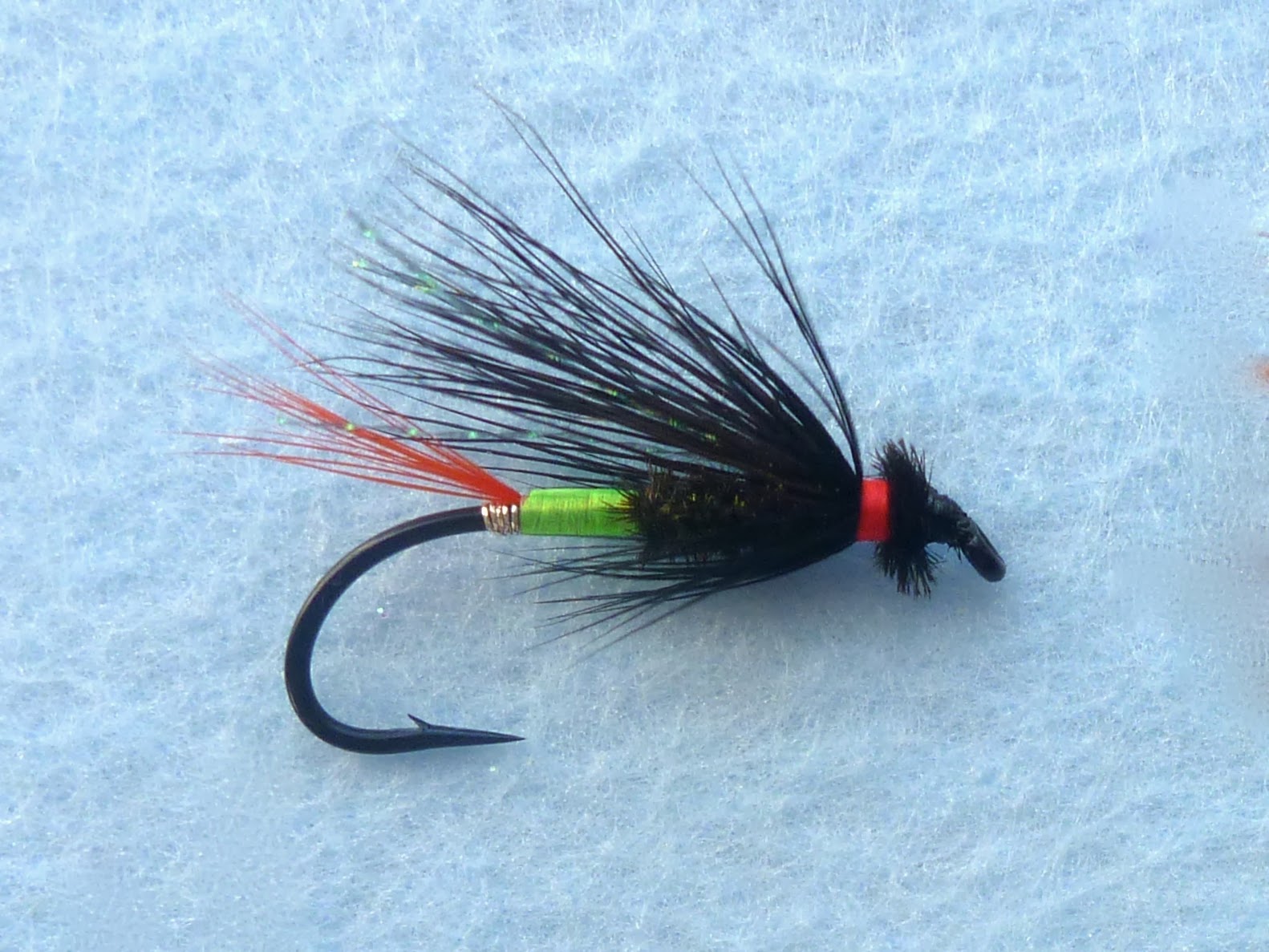
Tuesday, March 11, 2014

Naugatuck Report - March 9 & 11, 2014 - Welcome Back, DST!

There is still plenty of snow left on the hill

I am so happy to have Daylight Savings Time back. Sure, there is still snow everywhere, forecasts of single-digit temperatures two days from now, and possibly even more snow on the way. But at least we have evening sunlight again! 

I celebrated the return of DST by heading to the Naugatuck after my weekly church gig on Sunday, March 9th. I usually don't fish for salmon in the winter, but I needed some time outdoors and I figured there would still be a few fish hanging around. The water temperature was in the high 30s and the air temperature was in the low 40s. The water was low for this time of year, but it was a nice level for certain pools. The water was a little colored, but not too murky. 

I started where I left off last December and I was on the board within 10 minutes of wetting my line. The salmon was a little too big for my grilse net. He took a relatively small, orange and yellow fly tied on a copper Shumakov Long Range tube (see below). I figured I was going to have another banner day. Wrong! Think again! That was the only fish I saw all day long. No one else I spoke to hooked anything. 

A simple but effective tube fly for cold water

I figured today, March 11th, would be a different story. With highs in the low 50s, I thought the fish would be a lot more active. Wrong again, dummy! It was even slower than Sunday. The water rose throughout the day, so that probably didn't help much. The water was more colored than Sunday, as well. I didn't see one fish today. No tugs, no rises. It was a beautiful day though. I packed up early and ate lunch at a picnic table overlooking the river. 

I know I said it before, but now I'm definitely done for the season. I'm really looking forward to targeting sea run browns and resident trout soon. I'll do my best to reconnect with some bright atlantic salmon in late spring and early summer. Until then, I have fly boxes to sort, gear to clean, and lots of tackle prep ahead of me. 

Thank you to everyone who has followed this blog throughout the CT salmon season. I plan on hitting the ground running next fall. A few of you expressed interest in spring trips and I told you to wait until next season for maximum educational benefit. As soon as the fish show up, I'll be ready to go. Remember, the most fun, interesting and diverse fishing typicaly happens early in the season! 

I have some product reviews, fly tying posts, interviews, and a "tribute" post in the works, so be sure to keep checking in,..

See you next fall


Monday, February 10, 2014

Scrapbook Flies

This fly box needs immediate attention

I have a collection of flies I keep in a clear fly box. The box is stuffed with flies and is virtually overflowing. One of these days, I plan on getting another clear fly box and separating them into two collections. One collection will be all flies that have been given to me over the years, but never fished. I have saved some of these to use as models for my own tying. Others are more like little keepsakes. If I fished one, I might never get a replacement if I lost it. The other collection is made up of flies that trigger memories or tell stories. This portion of the box is sort of my fly fishing scrapbook. Below are some flies from that scrapbook.

The Woolly Worm - A very powerful gateway drug! 

Woolly Worm

This fly is the very first I ever tied. I was around 13 years old. I took fly tying lessons at the now defunct Fin & Feather Lodge, formerly in East Greenwich, Rhode Island. I was by far the youngest in the class by at least 20 years and, in most cases, a lot more than that. They used to call me "the kid." Because I was still at least three years away from driving, the old timers would let me in on their "secret spots." I remember one old guy looking back and forth before he told me about his honey hole, just to make sure no one else was close enough to hear! 

My first fly tying instructor, Bob Greco, told the class to refrain from fishing our first fly in case we lost it. He said we'd want to have it down the line. Bob was definitely right and I'm glad I still have my very first self-tied fly. I hooked my first trout on the second fly of the class, a marabou leech pattern. Unfortunately, the fish made off with my fly. I'm okay with that though. At least I still have my Woolly Worm. 

Sugerman Shrimp #10
M1 Killer #10 

Sugerman Shrimp & M1 Killer

These two are big milestone flies for me. In fact the Sugerman Shrimp changed my life. I hooked a dark, multi sea-winter, Miramichi River Atlantic salmon on my first evening salmon fishing. I got the fish close, but lost it as I walked backwards towards the shore. That fish took a #8 Sugerman Shrimp I had tied a month before the trip. I sweated out the next five days without so much as a tug. We fished the morning of our last day. The rain from front end of Hurricane Kyle brought in the fish from the estuary. I landed my first Atlantic salmon (a grilse) in pretty short order. He took a #10 Sugerman Shrimp, tied by my friend and guide, Darryl Tucker. I hooked two others that day, one on another Sugerman and one on a Black Bear Green Butt. 

I was happy I didn't get skunked on that first trip, but bummed I had lost that first msw salmon. The next year we fished in horrible conditions. The water was so low, not even heavy rain brought the river up. Miraculously, I didn't get skunked, landing the only fish hooked in camp all week. That handsome Miramichi River hookbill took a #10 M1 Killer, a fly recommended by my friend Dave Goulet. The Sugerman Shrimp started the addiction, but the M1 is responsible for my first fish I could call a salmon. 

Far from my best tied Catskill dry,
but it was good enough for the trout

March Brown

Prior to this particular afternoon of fishing on Connecticut's Farmington River, I had never experienced a March Brown hatch. I did have a few crudely tied March Browns with me, however. I don't remember when I tied this. It could have been a remnant from my teenage tying days. I still fish with those old flies from time to time.

I arrived at my favorite pool and was relieved to be alone. Not only was I alone but, from the minute I arrived, the entire pool was boiling with rising trout. There were bugs everywhere, mostly tan caddis and sulfur colored mayflies. There were some March Browns around too, but in much smaller quantities. I caught a couple trout on an X-Caddis before I switched to my March Brown. I'm not exaggerating when I say every trout I put that fly in front of nailed it. Not just for a little while, either...all day long. I only had three March Browns with me and I had to do all I could just to keep them afloat after catching so many eager brown trout. I lost one in a fish and had to switch to other flies while the other two dried out. In terms of sheer action, it was the most exciting day of trout fishing I've ever experienced. 

This old soldier didn't owe me anything

Mickey Finn

I've said it a million times here...year in and year out, I catch more Naugatuck salmon on a #6 Polar Bear Mickey Finn than anything else. This particular Mickey Finn went out in a blaze of glory. I don't know how many salmon I landed on this very fly, but it was a lot. The last fish caught with this fly was a salmon in the upper teens weight class. This fish was seemed like it preferred fighting from the air more than from the water. I landed the big male and the hook was right where it should have been, in the scissors of the jaw. The salmon had a big, toothy kype and I had to grab the fly with long pliers instead of hemostats. One twist of the pliers and the hook broke in half. Maybe the hook grew incrementally weaker over time? Maybe all that weight and constant jumping pushed the hook over the edge? I don't know, but I'm okay with how things turned out in the end. 

Homecoming Hex Spinner

Hexagenia Spinner

Though I grew up fly fishing western Rhode Island's Wood River, I never experienced its most renowned hatch until much later in life. I knew I wanted to fish this nighttime hatch and practiced by fishing large Wulffs and Stimulators, after dark, on a river near my current Connecticut home. It didn't take long to become comfortable fishing "by ear," so I decided to make my first trip back to the Wood in almost 20 years. To say my home river welcomed me back with open arms would be a gross understatement. 

To make a long story short, much like the March Brown above, my self-designed Hex spinner was all I needed to beat up on trout for the duration of a fairly long Hex hatch. If there was ever a case of "beginner's luck," this was it. I was in the exact right place at the exact right time. It was my turn to be that guy. To be honest, the whole thing was met with a little resentment by the regulars. They assured me, "Don't get used to it...it's not usually like that." Nope, it's not usually like that. In fact, I've fished that hatch many times since and have never come close to catching as many or as good sized trout as I caught that first night. 

Hex night was only about a month after my March Brown bonanza on the Farmington. That was a really good summer for trout fishing. 

The original "heartbreak fly" went missing in action
(tied by Marc Leblanc)

Blue Butterfly 

I have told this story before, so I won't rehash the whole thing here. I'll sum it up by saying this fly, a gift from my friend Marc LeBlanc, was left behind in the salmon I most wanted to land. I have since hooked larger salmon, some landed and some lost, but none I wanted as badly as I wanted that Nova Scotia firecracker. After I lost the original #6 Blue Butterfly, and after I finally regained my composure, I raided Marc's fly chest for two more. One for immediate use and one for my collection. The funny thing is, I'm not sure I would even fish this oddball pattern again. I love Butterflies, and have even replicated this fly, but the story is probably better if I never hook another salmon on a Blue Butterfly.

I love Gurglers

Black Gurgler

This fly is a tangible memory of what might have been the most exciting day of fishing I've ever had. If it's not the most exciting, it's definitely in the top three. I was on a Caribbean cruise with my wife and her family. We had a day in-port in St. Maarten, but no activities planned. Before the trip, I went online and tried to find some possible unguided fishing opportunities. I saw reports of baby tarpon caught on spinning gear a few miles from port. I procured a map, figured out where to go, hailed a taxi and was on my way. 

This was real urban fishing. I felt like I was fishing in the North end of Hartford, Connecticut. There were drivers honking their horns all day long, countless numbers of pedestrians walking by and the constant sound of police cars and ambulance sirens the entire time. There was a white plastic lawn chair floating in the cove in which I was fishing. The weather was lousy, too. It was a little chilly and it drizzled or rained pretty much all day long. 

None of that mattered. The place was teeming with baby tarpon. They traveled in schools and they were grabby. Just wait for the school to pass by, watch for their backs and cast away. They turned around in the cove, so they could be caught either coming or going. 

I hooked my first (and smallest) fish of the day in my first ten minutes. That little five pounder grabbed a small Black Death. I lost him. A few minutes later, I was tight to a fish that went about twenty-five pounds. I almost landed him, but no dice. I was fishing from a mangrove-lined shore and landing these powerful fish was virtually impossible. I was using my favorite single handed salmon rod, a 9' Vision GT Four 8wt., but it just wasn't enough rod to stop them from diving into the Mangroves parallel to where I stood. 

It didn't matter. I was having as much fun as I've ever had fishing. It was like fishing a farm pond for bass, only the bass averaged 15-20 lbs. each, were extremely numerous and fought as hard as anything I've ever hooked. That and I was in the middle of the inner-city. 

I finally did land a tarpon. I saw the school coming and I had my black Gurgler ready. There's no fly with which I'd rather catch a fish than Jack Gartside's Gurgler. Fishing that fly is an adrenaline rush. I led the school and saw a tarpon slow roll the Gurgler. I strip set as many times as I could before the fish went airborne. This was the only tarpon that I had hooked solidly enough to withstand all the acrobatics and pull out from the mangroves. After an exciting fight, I beached the fifteen pound fish and grabbed the hook to remove it. The tarpon flopped around, snapped the point off the hook and rolled back into the water.

When I looked up, I noticed a crowd of passersby had gathered to watch the whole thing. As soon as the fish was gone, they all left. After that, I noticed that people stopped every time I hooked or jumped a fish, which was constantly for a while. I guess they don't do much baby tarpon fishing in urban St. Maarten. 

Unfortunately, I didn't get a picture of the tarpon, but it doesn't matter. I will never forget that day. Every time I look at that horrifically mangled Gurgler, I crave another trip to St. Maarten. I don't even like cruising, but I would do it again for this alone. I can't imagine what this place might be like on a good day!

-------------------------------------

There are plenty more stories in the scrapbook fly box. Of course, there are plenty of stories about the gifted flies in the other part of the box, too. Like the Blue Butterfly, there are stories about flies which gave gone missing in action. And there are stories about flies still in service, waiting to either be ripped from my leader or become the next Polar Bear Mickey Finn of my collection. 

Monday, February 3, 2014

The Dynamic Duo

Early period Pryce-Tannatt Irish flies (c. 1914)
Note the heavier dressing compared to the flies below

I would be hard pressed to pick my all time favorite fly tyer. So many have influenced me. For all around mastery, it's hard to beat my buddy Ted Patlen or Davie McPhail. For hair wing salmon flies, Warren Duncan or Jerome Molloy.  My pick for pure creativity is Jack Gartside, who is definitely in the running for all time favorite. Classic American trout flies…Harry and Elise Darbee. Modern American trout flies…probably John Barr. Flies tied artistically...my friend Paul Rossman gets the nod. There are many more categories and tyers…too many to mention.

In the classic salmon fly category, two tyers vie for top honors. The first is Dr. Thomas Edwin Pryce-Tannatt (1881-1965), considered the last of the Victorian era tyers. While Dr. Pryce-Tannatt is best known for his classic book "How to Dress Salmon Flies: A Handbook for Amateurs" (1914), my favorite work of his are his late period flies.

Later period Pryce-Tannatt flies (c. 1952)
Dressed for fishing the sunk line, greased line and in between

First, it's obvious that Dr. Pryce-Tannatt's tying skills improved greatly in the years between when his book was written and when he tied the examples from his piece published in The Field Annual (1952). Most of Dr. Pryce-Tannatt's later flies were dressed much simpler than the exaggerated Victorian era flies in his book. Classics were pared down to essential elements. Take the Jock Scott pictured above, for example. The body is dressed in typical Jock Scott fashion, but the wing is only made from white tipped turkey and bronze mallard. He omitted the bustard, multi-colored dyed swan, golden pheasant tail, etc., prescribed in his book. As fun as those grandiose old flies can be to tie, all the bells and whistles are unnecessary. His later flies were tied further up the shank (a sort of low water style) than what was traditionally done at the time. Wings rode low and were rarely longer than the hook itself. In terms of overall proportions, these flies really speak to me. They're perfectly tied but, at the same time, look really fishy to me.

It's worth reading the piece which accompanies the selection of flies pictured above. Dr. Pryce-Tannatt goes into much greater depth on the evolution of salmon flies than I can here. The article can be found on the fantastic Feathers, Flies and Phantoms site. Not surprisingly, and as evidenced in the style of the flies above, Dr. Pryce-Tannatt mentions the influence both Ernest Crosfield and A.H.E. Wood had on the fly style of this transitional period.

This unique Silver Doctor is both beautiful and built like a tank.
Notice how the underwing and main wing are barely visible.

Born in Spain and after the publication of Dr. Pryce-Tannatt's classic book, Belarmino Martinez (1919-2000) can hardly be considered a Victorian Era tyer. I suppose the term "neoclassical" might apply in his case. Whatever his classification, Martinez tied one heck of a salmon fly.

I have to admit, Martinez wasn't always one of my favorites. His flies have a very distinct and sort of angular look to them. His arrow-shaped heads were lacquered, sometimes in unusual colors (brown or very bright red). He cut his toppings, giving them an abrupt taper. Martinez seemed to have a fondness for very wide strips of waterfowl flank feathers. Often times, the combination of bronze mallard, wood duck and teal would almost completely obscure the main wing underneath. He threw out the notion that a classic salmon fly should have five turns of tinsel for a rib and often used almost twice that number (presumably for durability).

My only Martinez fly, this Silver Martinez sits on my desk

My fondness of Martinez's work grew when I acquired one of his signature flies, the "Silver Martinez." Being able to hold that fly in my hand made all the difference. I couldn't believe how well built that fly was. It looks like it could catch a dozen salmon before it would begin to break down. The taper of the body looks just right. These flies were tied to fish, but they were little works of modern art. They tip their hat to the old school Victorian tyers while having a look all their own.

There are many other classic salmon tyers whom I admire but, at least at the moment, Dr. T.E. Pryce-Tannatt and Belarmino Martinez are the big two. While on wintertime home confinement, I am going to try to synthesize the style of the pair. It will be a work-in-progress and it might take me a while to get it right. These flies will be tied for fishing. Where? I have no idea yet but, given the opportunity and the right conditions, I am very eager to use them.

Wednesday, January 29, 2014

Upcoming Events: February 2014

Russian Bullet Variation


After I hung it up for the 2013 season, I took a little break from tying and took care of a bunch of other things that needed to be done. Thanks for sticking with the blog in my absence. I've been back at it lately and wanted to share a couple of upcoming events. 


Annual Expo 2014

February 1, 2014
9:00am-3:00pm

Maneeley’s Banquet and Catering
65 Rye St.
South Windsor, CT 06074

*Guest Fly Tyer-Tube Fly Demo*

----------------------------

“Traditional Techniques for Broodstock Atlantic Salmon”


February 19, 2014
7:00pm

Farmington Senior Center
321 New Britain Avenue
Unionville, CT 06085


Friday, December 13, 2013

Naugatuck River - Fall 2013: Observations & Thoughts

A two-handed rod can be a valuable asset in hard-to-wade pools

On Tackle...

Before this season started, I was unsure whether or not to use lighter gear due to the smaller size of the salmon. Especially in September and early October, I caught fish on a wider variety of rods than I've ever used in the past. On the lighter end, I landed salmon on an Echo 10'6" 4wt. switch rod. As long as the fish was far from me, the rod handled wonderfully. It definitely lacked backbone when I got the fish in close, however. I also used a Vision GT Four 9' 6wt. single handed rod. That was fine for some fish, but one salmon really kicked my butt on that setup. Though these fish can feel lethargic (especially come November), if you hook into enough of them, you will find some real tough guys mixed in. This is especially true when the water is warm. When the water temps are in the mid to upper 60s, you want to play these fish hard and fast. Sure, pretty much all of them can be handled on lighter tackle, but why stress them unnecessarily? After landing a few, I went back to using the same gear as always. As I've stated before, my main three rods are:

9' 7wt. Sage Graphite II - a nice medium-fast action IM6 rod
11' 6wt. Sage Z-Axis switch rod - my bread and butter rod
11'3" 7wt. Redington CPX switch rod - for heavier flies and fish

The water was very low most of the fall. Most of my takes were induced rather than on the pure swing (flies were stripped, drawn in slowly, hand twisted, etc.). As such, I found it much easier to use a single handed rod in most situations. The 9' 7wt. Sage was just right for what I needed to do. 

I think using a long leader really helped a great deal. An 8' or 9' leader is usually all that is required, but I used a 12' tapered (hand tied) leader for much of the early season. Maxima Chameleon was fine,  I didn't need to resort to using fluorocarbon. I fished a lot of size 10 flies this year and coupled them with 6 lb. test, which I felt was stealthy enough and still quite strong. As the season progressed, I shortened my leader, sometimes fishing a straight, 9' piece of 12 or 15 lb. test Maxima.

In the tackle department, the single best decision I made this year was to start carrying a net. When 8 lbs. was the average size of a CT salmon, tailing a fish was my preferred way of landing them. It can be difficult to tail a smaller salmon. Even if I felt comfortable with the "Vulcan Grilse Grip," I'm confident I can land a small fish faster with the net than with my hands. I settled on a Brodin Trout Bum net (San Juan model). The aluminum frame is nothing fancy, but it's very durable and will never warp. Though it's large for our average river trout, the net is just the right size for smaller salmon.


An Owner hook in the mouth, a Same Thing Murray tube fly safely
up the leader and a salmon in the net...everything's working just right


On the salmon themselves...

I have to say, I had some memorable scraps this season. Given the smaller size of the fish, I thought I might get bored relatively quickly, but that wasn't the case at all. Overall, they were a very acrobatic bunch. Not only that, but some were quite strong for their size. I chased more than a few around this season. I think a lot of the very early fish hadn't spawned and were still full of piss and vinegar. It wasn't unusual to hook into a bright silver salmon early in the season. 

I'd say my average fish was 4-5 lbs. I caught a couple really tiny salmon and a few larger ones, though I didn't land any of the big boys this season. I lost one that I'd estimate was 12 lbs., but nothing like the fish in the upper teens I've caught the past few years. I'm not complaining, though. I'd rather catch really spirited smaller fish than lethargic larger ones. 

I caught more well-conditioned fish than ever this season. Maybe it's because they're a year younger than they used to be and there's less time for them to get battered...I'm not sure. The toughest fish I landed were almost always in pristine condition. Sure, I caught some beat up ones too, but I caught a much higher percentage of good looking fish than I ever have. The crew at the Kensington hatchery deserves a big "thank you" for all the hard work they do to provide us with this unique fishery! 


No surprise, the Polar Bear Mickey Finn was my best fly this season

On flies...

In seasons past, I'd usually catch a fish or two on a size 10 wet fly. This season, I hooked 10 salmon on 10s. Though I could have lived without the dead low water, I really enjoyed fishing small flies and long leaders this season. I suppose that went hand in hand with the conditions, though. 

Not surprisingly, the Mickey Finn came out on top this year. Strangely enough, all eight salmon I hooked on it took a size 6. When I fished it in other sizes, the salmon wanted nothing to do with it. Historically speaking, that has always been the most productive size for me. I don't know what it is about this fly they love so much.

I've come to the conclusion that, as long as the water isn't too colored, I only need one fly for dark days on the Naugatuck River. At least for me, the Same Thing Murray has been peerless under these conditions. It finished a very close second behind the Mickey Finn. However, if I had factored guide trips into my stats, the Same Thing Murray would have bested the Mickey Finn. It doesn't matter, I can't be without either one. Unlike the Mickey Finn, I had success with the Murray in wide range of sizes, from #2 all the way down to a small #10 (tied on a trout hook). 

Third place was the Snaelda, which beat out last season's top fly, H.M.'s Sunray Variant, as the top tube fly of the year. The German Snaelda (pictured below) was the most effective color scheme. I had success with two varieties of German Snaelda. One was relatively small (1/2" copper tube, 2" overall length) and was tied with bucktail. The other was larger (3/4" copper tube, 3" overall length) and was tied with arctic fox. If I had to choose one or the other, I prefer the smaller Snaelda tied with bucktail. The other Snaelda which worked well for me was all-black and tied, with bucktail, on a 1/2" copper tube. That fly worked particularly well on warm, sunny days when the fish were hunkered down in the fast water.

As I mentioned in prior reports, this is the first season in which I've had success with Buck Bugs. Until recently, I fished various bugs for years without even a sniff from a Connecticut salmon. Perhaps due to the low water, the salmon were more surface oriented than usual this year (more on that below). That's the only explanation I have for why Buck Bugs seemed to produce for me this year all of a sudden. A more likely explanation is that I fished the bugs in pools I knew were full of grabby fish. Perhaps it wouldn't have mattered which flies I used? Either way, I'm relieved that the "Broodstock Buck Bug Boycott" is now over! 


On overcast Naugatuck days, the Same Thing Murray is
my hands down favorite. Nothing else even comes close.

On fishing methods and techniques...

As I look back through my notes, the thing that stands out to me the most is that, out of the thirty-six salmon I hooked this year, not one of them was hooked while using a sinking line or sink tip. Not even one! I devoted time to fishing a sunk line once the water cooled off, but I can only recall moving one fish with that setup (it never came back for the fly). Even my last outing, with a 42ºF water temperature and a river falling from a good rain storm, salmon were still willing to rise for a fly! 

That's not to say my only action was on unweighted flies. It most certainly was not. I hooked seven salmon on copper tube flies, but they weren't fished on anything more than an intermediate polyleader. In fact, some of them were fished on a 100% mono leader (to get down quickly through the choppy water at the heads of pools). 

This got me thinking about something I read regarding catching Pacific northwest winter steelhead on or just under the surface. If I remember correctly, the author stated that, even in cold water, it could be done so long as the air temperature was warmer than the water temperature and the water temperature was actively rising. Near the end of November, a friend of mine caught a Naugatuck salmon on a dry fly in water I previously would have never thought capable of being productive with dries. I had taken my dries out of my pack a couple weeks prior to this trip. I saw him catch the fish and the wheels in my head started to spin. I switched back to a mono leader and caught a fish just under the surface very shortly thereafter. Maybe there is really something to the wintertime rising water temperature theory?

This leads me to my biggest regret of the season. Prior to the season opener, I resolved to fish the riffling hitch as much as possible this season. I even tied a bunch of hitch tubes of various sizes and color variations. For some reason, I just didn't give them much of a shot. I had one fish grab a waking dry fly. My hottest fish of the season boiled for that same waking dry fly. If nothing else, a skated dry proved to be a great "fish locator" for two very aggressive salmon (who were both later caught on wet flies). Would either have chased a hitched tube? I think they might have, and possibly others, too. It's going to have to wait until next season, but barring extreme high water conditions, I'm going to actually fish the hitch more.

Last season was the first time I fished Sunray type flies with a two handed strip. I stripped those tubes as fast as I possibly could and fish nailed them like crazy. If they didn't nail the tube, it at least gave up their locations and signaled that they were willing players. That didn't work too well this season. I did catch four salmon the H.M. Sunray Variant, but three of them were caught on the same day. I think that approach was too aggressive for them in the extreme low water conditions we had this year. Previously, the Sunray was my last resort. This season, I found the copper tube (mainly the Snaelda) and a slower presentation a much more useful last resort tactic, even in warm water.

The German Snaelda is tough to beat

The low water can be a pain in the neck. I enjoyed it at first, but it really overstayed its welcome. There's one particular pool I'm really not too fond of. It's very heavily fished, difficult to wade, hard to land fish alone, very slow in low water, has some very troublesome obstacles, etc. This spot really drives me nuts, but I do quite well there, so I continue to fish it. When the water is really low, the salmon seem to lie in a deep trough on the near side of the current. Swinging flies is almost impossible. The water moves too slowly. I tried dead drifting a dry fly, but it wasn't too effective.

The best technique I've found (at this pool) in low water is to use a long leader, small wet fly and a slow, steady draw. I cast the fly to the edge of the current and I retrieve one of two ways:

1. I put my line hand all the way up to the first guide and pull the line down, past my hip, very slowly while still keeping the line tight. Eventually, I can't strip any farther and have to start over again.

2. I cast and immediately place the rod under my arm. I strip with two hands, but extremely slowly. It's really similar to the approach above, but the fly never stops moving.

Both techniques proved themselves deadly in this particular pool. I'm not exaggerating when I say it was almost a spectacle on a couple of occasions. I'd show up to the pool and find either spin fishermen throwing medium sized lures or fly anglers throwing weighted buggers or larger streamer type flies. Keep in mind, it was still quite warm out. I'd rig up my 9' 7wt. with a 12' mono leader, tapered down to 6 lb. Maxima. My flies of choice were either an M1 Killer, Sugerman Shrimp or an Almost, all size 10 (sometimes even tied low water style). I think the salmon were put down by all those big lures zooming in front of their faces. I gave them something different...a small, often subtly dressed wet fly, fished high in the water column and just barely faster than the current. This lie is quite deep, but the salmon would come right up to the surface for these small flies. This method produced some vicious takes!

Little killers (top to bottom): M1 Killer, Red Butt Butterfly & Almost

Overall, I'm very pleased with how this season went. I had really good time, especially in September and early October. The weather was warm, the fish were often very aggressive and many fought quite hard, despite their reputation. I've said it a million times...get out there early in the season. I think a lot of people wait until most of the fish are in the river. You won't catch me doing that! Even if there are relatively few fish around, the ones that are there will still set up in the best lies. At that time of year, those lies are usually great taking lies. Maybe I'm cursing myself here, but I fished alone an awful lot in the beginning of the season. I'm not complaining. I prefer it that way! It just seems like most people go out a couple of times in November, maybe they hook something maybe they don't, but they miss the most exciting time of the year. Our season started in September this year, well earlier than I can ever recall it starting before. It was great! I hope that continues. Don't take my word for it though. Get out there early and see for yourself. Or don't...I'm more than willing to shoulder that burden!

I'm going to keep updating this blog throughout the winter, so keep checking back. I have a very special joint project in the works with Paul Beel at FrankenFly. I have to wrap it up, but the hardest part is already done. Look for it sometime in early 2014. Also, I wanted to have a giveaway for my 100th post...sort of a "thank you" for your support. #100 happened a couple weeks ago, but I still want to make it happen, albeit belated. I have some good gigs coming up, so there might be a brief lull here for a few weeks.  I'll be back at the vise soon though. As always, feel free to contact me if you have any questions.

Have a happy holiday season!

Tuesday, December 10, 2013

Naugatuck River - Fall 2013: Data

The leaves are all gone and winter is almost here

I never have been one to keep a fishing journal for my trout fishing. I guess I'm just not into entomology and typical trout stuff all that much. As far as sea run trout go, I can see myself starting one eventually, mainly to document run timing. I used to keep a broodstock salmon journal to document effective techniques at certain temperatures, water levels, etc. I got lazy last season and didn't write anything down, which I now regret. This season, I decide to make this blog my journal. It helps me keep track of trends and maybe it will help some of you, as well.

Though it's still technically autumn, I wrapped up my fall CT salmon fishing season with one trip in December. I have tallied up all my stats, effective flies (and sizes), trips per month and as much other relevant information as I can think of. Please forgive me if the data portion of this summary is sort of dry sounding but, like I said, this blog has become my journal. In addition to the data, I will post some general observations I have made in a follow-up post. Hopefully, that will be more interesting. 

Note: When collecting data on effective flies this fall, I am only including instances of salmon being legitimately hooked. With the exception of dry flies, I am not including information of flies which might have rolled a fish, gotten a pull, pricked a fish, etc...only flies which actually hooked a salmon long enough to be on the line for at least 10-15 seconds or so. Also note, this data only pertains to my own fishing, not from trips in which I was the guide. 

Number of Trips & Success Rate

Total number of trips to the Naugatuck River: 15
Full Day Trips: 9
Partial Day Trips (3 hours or less): 6

September Trips: 5
October Trips: 6
November Trips: 3
December Trips: 1

Salmon hooked: 36
Salmon landed: 29
Average hooked per trip: 2.4
Average landed per trip: 1.9
Largest salmon landed: about 8 lbs. (3 salmon this size)
Smallest salmon landed: 2 lbs. (2 salmon this size...a liberal estimate on both!)
Largest salmon hooked: estimated 12 lbs. (lost after several minutes)
Incidental trout catches: 1 (small brown trout, possibly wild)

Skunkings (trips w/no fish landed): 4
Trips w/o a hookup: 2
Trips with absolutely no action of any kind at all: 1 (cold day w/falling temps & colored water)
Trips with more than one salmon hooked: 8
Trips with six or more salmon hooked: 3
Best single day: 7 hooked, 7 landed (October 10th)
Pairs of forceps lost: 2 (1 expensive, 1 cheap)

Environmental Data

Highest recorded water temp: 68ºF (September)
Lowest recorded water temp: 40ºF (November)

Highest flow fished: about 350cfs (November)
Lowest flow fished: about 120cfs (October)

*Vast majority of days fished were when flows were below 200cfs (yikes)

Top 3 flies for 2013 (clockwise from upper right and in order):
Mickey Finn, Same Thing Murray & Snaelda (German and all-black)

Effective Flies (# of salmon hooked)

Conventional Flies:

Mickey Finn: 8 (all on a sz. 6)
Same Thing Murray: 6
M1 Killer: 3
Buck Bugs (various colors): 3
Sugerman Shrimp: 2
Almost: 1
Black Bear/Red Butt: 1

Tube Flies:

Snaelda (various colors and sizes): 5
H.M. Sunray Variant: 4 (3 w/orange & black; 1 w/white & black)
Ally's Shrimp Tube: 1
Same Thing Murray Tube: 1
Willie Gunn (w/gold body): 1


Effective Fly Sizes

#10: 7 salmon hooked
#8: 4 salmon hooked
#6: 10 salmon hooked
#4: 1 salmon hooked
#2: 2 salmon hooked

Aluminum tube flies (various sizes): 5 salmon hooked
Copper tube flies (various sizes): 7 salmon hooked
Plastic tube flies: 0 salmon hooked

Other Fly Data of Interest

*Dry flies were responsible for raising three salmon, two of which were later hooked on wet flies.

-both fish raised on a #6 Titanic were hooked and landed

-one fish was raised with a #6 Green/Brown Bomber, but was not hooked at all

* A hitched Sunray Shadow variation (yellow tube w/orange and black wing) raised one fish, but I'm not sure if it was a trout or a small salmon, as the fish was never hooked

------------------------------------------------------------

In my next post, I'll summarize my fall season with some general observations. I promise that post will be more interesting than this one is!

Friday, December 6, 2013

Naugatuck Report - December 6, 2013 - Who Needs Pink Flies?

A useless Pink Cosseboom
Hopefully, I will be proven wrong next season

When it comes to flies for broodstock Atlantic salmon, all I hear is "pink, pink, pink..." I have heard about the deadliness of pink flies for years. I tied a bunch of pink flies for today to see if all the praise is actually warranted. Some of the flies were predominantly dark with pink accents and some were bright, garish looking things. I wasn't going to fish the pink flies to the exclusion of everything else, but I figured I'd give them a fair shot in the rotation.

Other than the pink thing, I had a pretty modest goal today. I only needed to get one more salmon on the line to have hooked thirty for the fall 2013 season. One salmon hooked really isn't aiming too high, though anything can happen, be it good or bad.

I was happy to be reacquainted with my recently repaired Sage Z-Axis 11' 6wt. switch rod. I have been without my main Naugatuck salmon rod for over a month while it was at Sage HQ in Washington. We finally have a decent flow, so the two hander is a viable option once again. The water was 42ºF and the weather dreary and rainy, but relatively warm for December. I fished a floating head and a 10' intermediate polyleader with about 6' of Maxima Chameleon tippet, 12 & 15 lb. test. Given the conditions, it seemed like a faster sinking tip might be more appropriate, but I'd rather err on the side of fishing too high than too low, at least at first. Besides, if necessary, switching polyleaders or even heads is easy and takes very little time. 

In all, I fished six different pools today. Here is a brief summary of each:

Pool #1 - In my first pass through the pool, I raised a salmon on a #2 Crosfield's Black Silk (linked is the fly masterfully tied by my friend Marc LeBlanc from Moncton, New Brunswick). I couldn't convince him to come back, however. I tried the Pink Cosseboom (#2) on my second pass, but there was no interest. In my experience, the Same Thing Murray is virtually peerless when used on dark Naugatuck days. I tried a #4 Murray and hooked and landed salmon #30 in short order! My modest goal had been met early, so now I could relax a bit. Nothing else happened at Pool #1, so I moved on. 

30th hooked for the season

Pool #2 - In my opinion, this pool fishes best in low water. The water wasn't exactly high today, but it was high enough to make this a losing proposition. I didn't stay long. 

Pool #3 - This pool is new to me as of this season. It produced well for me when the water was very low and warm. I did nothing there today and moved on quickly. 

Pool #4 - Pool #4 was at the perfect level. The fishing was incredible; 5 lb. landed (#2 Murray), 8 lb. landed (German Snaelda; .5" copper tube), 6 lb. landed (German Snaelda; .5" copper tube), 6 lb. landed (Murray tube fly conversion; 1" copper), 12 lb. hooked and lost (Gold Bodied Willie Gunn; 2" copper tube)...Wow! 

Salmon #5 of the day took a ridiculous looking Same Thing Murray tube conversion on what was supposed to be my last cast in the that pool before leaving and moving upstream. The fish took on the reel-up! It wasn't elegant, but I'll take it. The best part about it was that it persuaded me to give the pool one last run, which was when I hooked and lost the 12 pounder. I lost what would have been my biggest of the season, but I still left very satisfied. 

The Same Thing Murray Tube Fly (1" copper)
I don't know what I was thinking when I tied this, but I'm glad I did

Pool #5 - On my first pass through the pool, I landed an 8 lb. salmon on the #2 Murray. This fish was quite a jumper. He seemed to be the only player in this pool today.

Pool #6 - At this point, I only needed to land one more salmon to have 30 landed on the season, a milestone that wasn't on my radar as of this morning. It was getting dark and Pool #6 was my last chance. Unfortunately, it didn't pan out.

The final tally was seven hooked and six landed. None of them took a pink fly. Other than the oddball Murray tube which, strange as it looks, is still "salmon colored," all seven fish took conventional salmon flies and tubes. Might one have nailed a Black Bear Pink Butt or the Pink Cosseboom? Maybe...I should have tried them while at Pool #4, though I'm reluctant to switch when tried and true salmon flies work as well as anything (and better than most). I guess I'm not convinced that pink is all that everyone around here makes it out to be. That said, I still haven't given it a fair shot. There's always next season, I suppose...

So that's it for me for 2013...I'm done! It was a lot of fun while it lasted. Fall 2013 on the Naugatuck was very productive for me, but it is time to move on. I'll wrap up this season in my next post and we'll see which fly wins the prize this year. Stay tuned!