Showing posts with label product reviews. Show all posts

Monday, March 13, 2017

Product Review: Loon Outdoors Ergo Bobbin


The Loon Ergo Bobbin fits nicely in hand.

     They say, "If it ain't broke, don't fix it." Despite the recent influx of premium bobbins, I've used only basic bobbins since I began tying flies at age 13. The spectrum of premium bobbins is vast. A standard Rite Bobbin costs about $25, while an Ekich Ultimate Bobbin can set the tyer back over $100. I usually don't spend more than $8 or so on a basic bobbin, but I decided to give the new Loon Outdoors Ergo Bobbin a shot. 

     The Ergo Bobbins retails for $19.95. It doesn't offer any sort of fancy thread tension adjustment like the Rite or Ekich bobbins. In that sense, the Ergo Bobbin is more similar to a basic bobbin than what we consider a "premium bobbin." That's fine, I use my hand to fine tune thread tension when necessary (more on that later). What sets the Ergo Bobbin apart from other basic bobbins, as well as some premium models, is the shape of the handle. Instead of wrapping one's fingers around a fine metal tube, the tyer's fingers grip a wide yellow handle. 

     I wasn't sure how much I'd like the handle, but I wound up loving it. I was amazed at how much more control I had over my thread when my hand was gripping the bobbin in a more natural position. I felt like I could lay down wraps of thread with more precision than I could with a standard bobbin. The Ergo Bobbin was just the right size for my hand. My thumb and index fingers grip the handle, while my pinky finger can rest on, or next to, the spool. 

Only 1 inch of thread separates the hook from the pedestal. 
     
     There was one big "strike" against the Ergo Bobbin, however. Look at the picture above. Because the Ergo Bobbin is so long, there was very little room between the bottom of the bobbin and the top of my vise pedestal when the bobbin was perpendicular to the hook shank. This was a problem when securing materials such as an oval tinsel rib. After wrapping an oval tinsel tip or rib, I try to keep as much tension on the material as possible until I get about three tight wraps of thread over it. I tend to move the bobbin back and forth between hands to keep maximum tension on both the material and the thread. Because of this, I need more than 1" of thread out of the tip of the bobbin. Also, I need to be able to totally stop the spool from spinning, which I do by squeezing the spool between my pinky and my palm. Because of the length of the Ergo Bobbin, this was an impossible move when switching hands and trying to keep tension on the tinsel. The bobbin was too long and the vise's pedestal base kept getting in the way.

     This would cease to be an issue if I had more room between the vise head and the pedestal (or if I used a C-clamp instead of a pedestal). I've considered adding a 3" vise stem extension for a while, mainly to get the hook closer to my eye level. This should solve the Ergo Bobbin length "problem." However, it might be nice to have the option of buying a smaller, "midge" sized Ergo Bobbin for when I need more clearance. 

     In all, the positives far outweighed the negatives. The enhanced thread control was so noticeable, I figure I can devise a solution for the above problem. The Ergo Bobbin is noticeably more comfortable than any other bobbin I've ever used. The Ekich S-Bobbin looks quite comfortable, too. But for a quarter of the price, I think I will stick with Loon's Ergo Bobbin. 


Monday, March 6, 2017

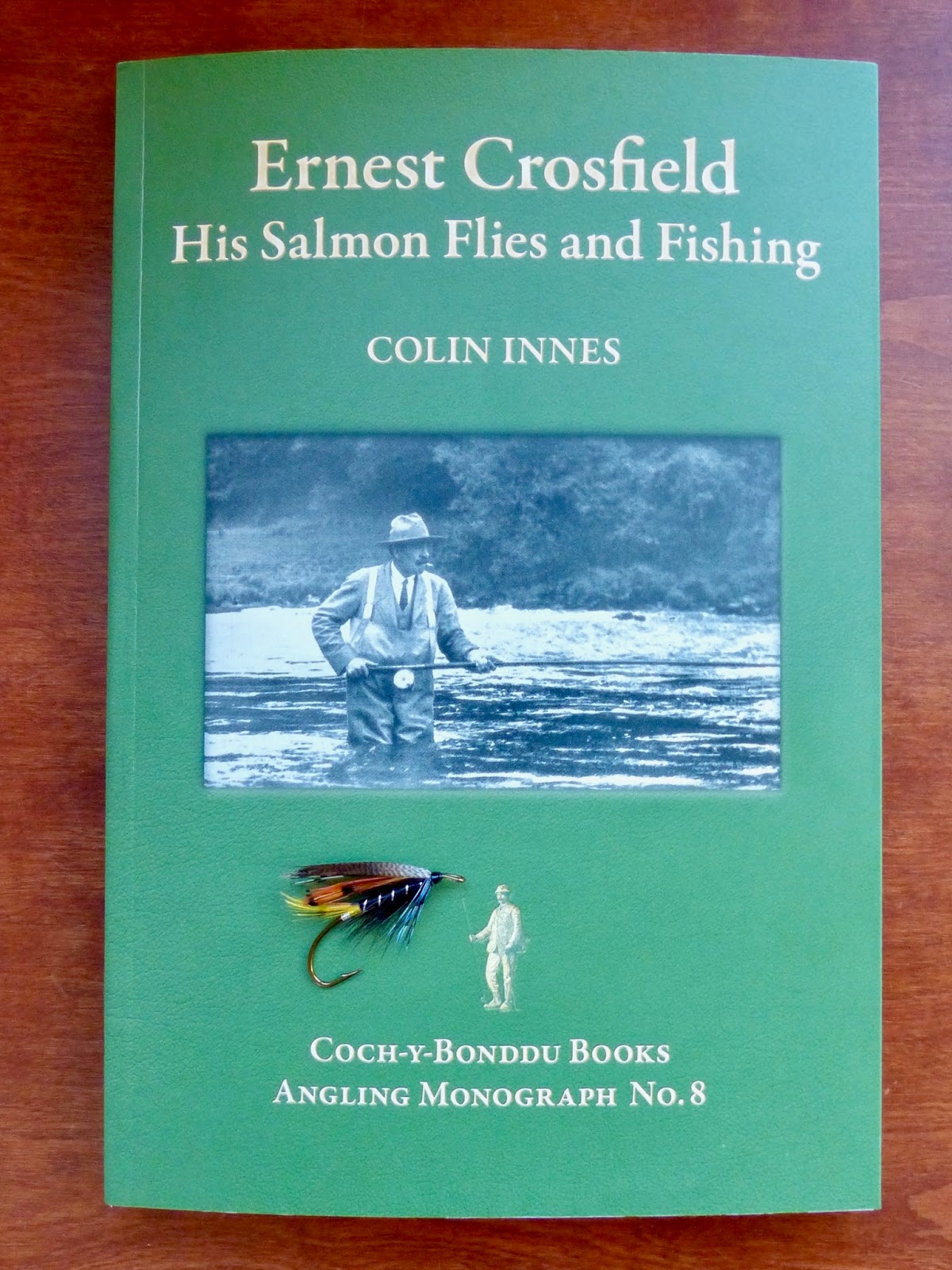
Ernest Crosfield: His Salmon Flies and Fishing (C. Innes)


     Ernest Crosfield is one of those people who should be more widely known than he actually is. Of the anglers active in the late-to-post Victoria era, it seems like Arthur H.E. Wood gets most of the press. It is understandable, given Wood's contributions to fly fishing. A book about Wood's greased line technique has been widely available since it was first published in 1935. Crosfield's exploits, on the other hand, were not as well recorded as Wood's, despite being a very important contributor to the sport. 

     Ernest Crosfield: His Salmon Flies and Fishing, compiled and edited by Colin Innes, is a collection of the relatively few pieces written by or about Crosfield. Those of us who were previously aware of Crosfield have read most of the contents of the book already. Many of the pieces within the book can be found either online or in other books, such as Fly Tying for Salmon by Eric Taverner and  Greased Line Fishing for Salmon by "Jock Scott" (Donald G. Ferris Rudd). Prior to reading Innes's book, I had already done the research and read most of the pieces. There were a few that had previously escaped me, the piece from Fisherman's Pie being one of them. 

     In my opinion, the best part of the book were the pictures of flies actually tied by Crosfield. I hadn't seen most of them before. Crosfield had a very unique style of dressing flies, later emulated by luminaries such as Dr. T.E. Pryce-Tannatt and Syd Glasso. Crosfield's flies had one foot in the past and one foot in the future. His basic method came from the Rogan school of Irish fly tying, but with a slimmer, sparser, and more streamlined appearance, one that would eventually become the norm, paving the way for modern salmon fly tyers. Innes book has pictures of a dozen or so Crosfield originals and adaptations, as well as the dressings for each. 

     Ernest Crosfield: His Salmon Flies and Fishing is a good read. Like I said, most of it is already available. The beauty of Innes's book is that it is now available all in one place. I was on a Crosfield kick a few years ago. I went through a lot of trouble to dig up the information found in Innes's book and I didn't even find it all. It would have been much easier (and less expensive) to buy this book if it was available back then! For those interested in learning about Ernest Crosfield, his fishing methods, and flies, I highly recommend this book. It is a short, quick read, but contains as much information about Crosfield as any of us are likely to find on our own. 

Crosfield's Black Silk


Monday, January 30, 2017

Blue Charm: Salmon Fishing in Scotland with Ian Gordon


Ian Gordon - your host on a tour of Scottish salmon rivers

     It took longer than normal for the annual holiday binge/purge cycle to go away this year. Last night, I finally had enough of it. I decided to dig out my running shoes and dust off the treadmill. I hate the treadmill. I don't really like running outside, either. I always preferred playing a sport to running. I miss living near the beach and going surfing. I've been considering getting my tennis skills back together this summer and possibly joining an indoor tennis club next winter. Anyhow...

     The treadmill is much more pleasant when I have angling videos to watch. I've been aware of Ian Gordon's movie Blue Charm for a while, but never saw more than the trailer. Last night was as good as any to watch it, so I found it streaming on fishingtv.com.

     Based on the trailer, I knew I would see beautiful footage of Scottish salmon rivers. The movie did not disappoint. I got a good look at the Rivers Dee, Spey, and Findhorn. At 84 minutes, Gordon's movie is a combination of history lessons, interviews, fishing strategy, and traditional spey casting instruction. Gordon even demonstrates fishing with an antique 15' greenheart rod, which was particularly interesting.

     In the past, Scotland was never at the top of my list of salmon fishing destinations, but I have been reconsidering it. The beauty of the landscape and the wealth of angling history is starting to push Scotland near the top of my list (Iceland is still #1). Watching Blue Charm reinforced this my changing opinion. With the USD to GBP exchange rate still favorable, the gears in my mind are turning.

     I'm glad I rented this movie and didn't purchase it. I'm not sure how often I would rewatch it. However, the DVD would be a wise purchase for a beginning Atlantic salmon angler. Gordon covers the rudiments of Atlantic salmon fishing in a way that is easy to understand, yet still entertaining. In my opinion, the best part was how he broke down pool coverage. Sometimes the longest cast isn't the best cast!

     In all, it was about as enjoyable as a treadmill workout can be. Every fly angler should watch this at least once. For those who are curious about or just beginning to fish for Atlantic salmon, I recommend buying the Blue Charm DVD and watching it a few times. After some time watching Ian Gordon present the basics, DVDs with alternative/advanced strategies (i.e. Henrik Mortensen's Fly Fishing Academy series) will makes more sense.


Monday, December 26, 2016

Gear in Review 2016


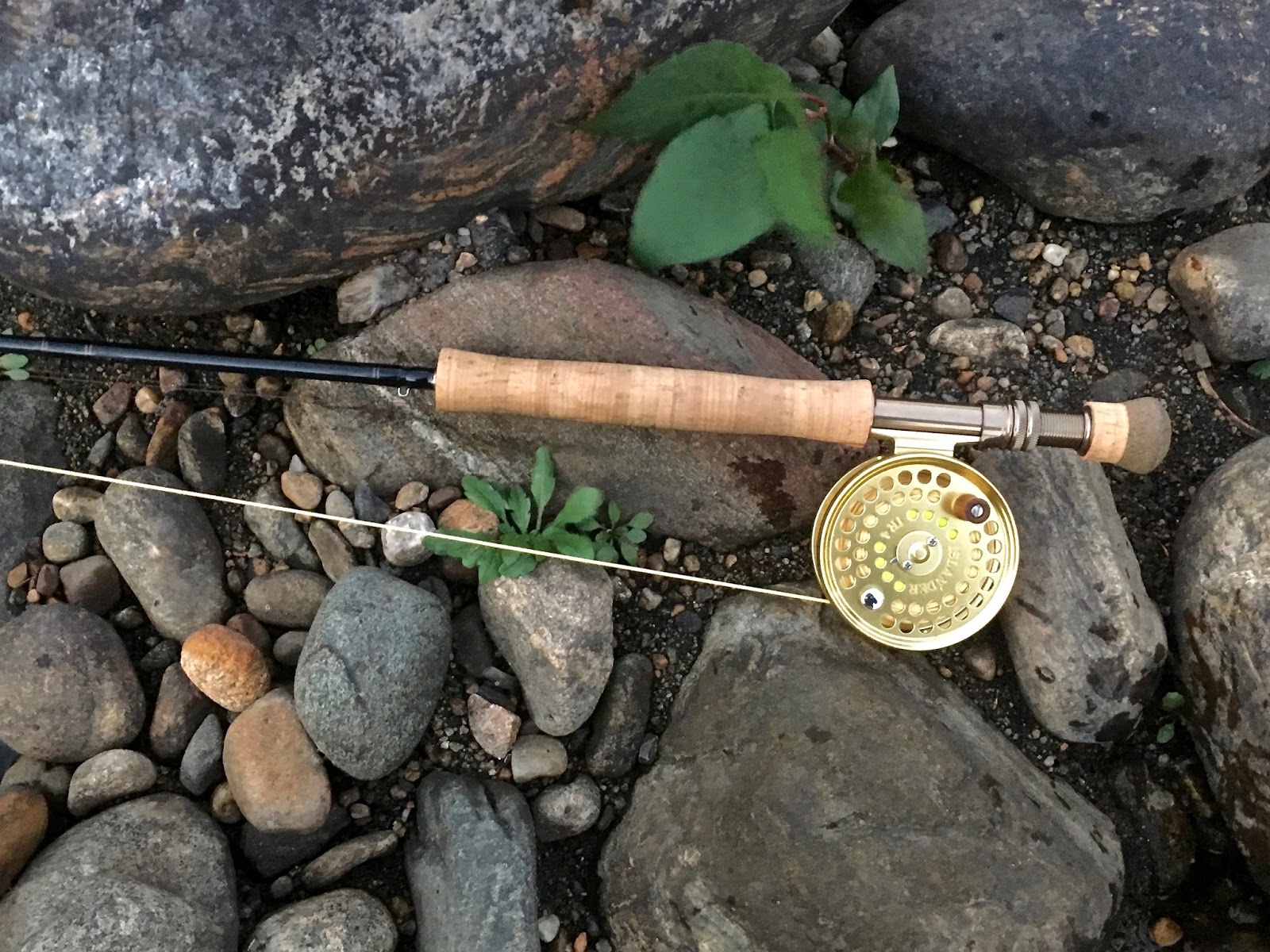
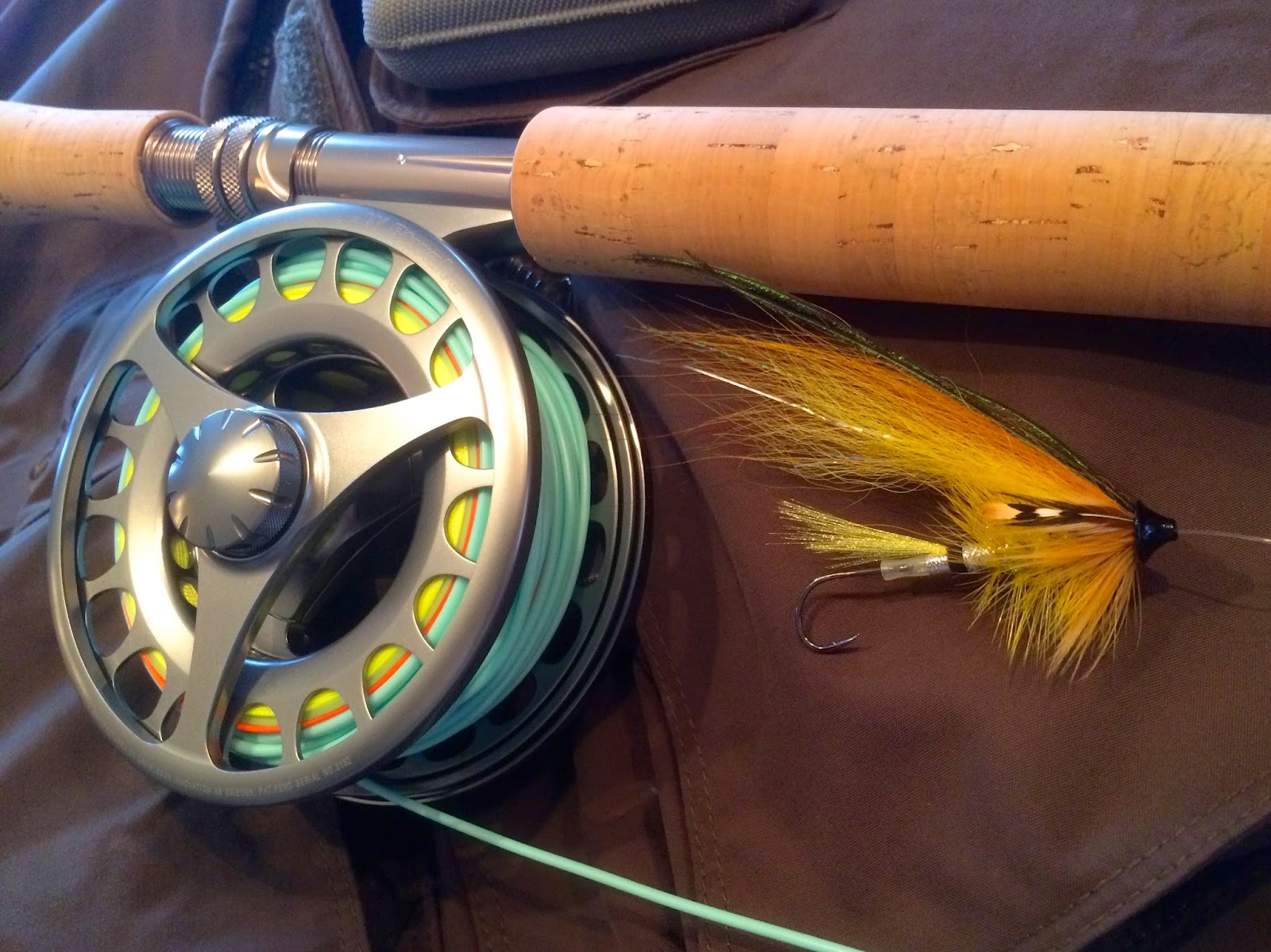
Sage One 9' 7wt. with "Ol' Faithful"

Tackle

     I've said it here before. I'm usually not on the cutting edge when it comes to buying the newest tackle. I can't afford to be! I fished with two Sage One series rods this year, a 9' 7 wt. and a 12' 6" 7 wt. I know the Ones are several years old, but they are the nicest rods I've ever owned. I was able to unload a lot of gear this year and I picked up a lot of gear at very good prices. The trick is to not be in a hurry and to wait until the right thing pops up used or on sale. Also, buying gear from Canada (with a very favorable exchange rate) saved me an awful lot of money. 

     The Sage One 790 was a closeout demo model from a local fly shop, UpCountry Sportfishing. At first, I checked it out and decided to pass. Trout fishing was slow that afternoon and I kept thinking about the rod. I wound up driving back to the shop, trading in my old Echo 4106 switch rod, and walking out with the One. My old Sage Graphite II rod is getting long in the tooth, plus I wanted a 7 wt. that would work well with my favorite reel, the Islander IR4. The One and the IR4 balanced well together. This combo is so much lighter in hand than my old 7 wt. outfit. It throws laser loops, but I feel like I have been fishing a 5 wt. trout rig all day long. 

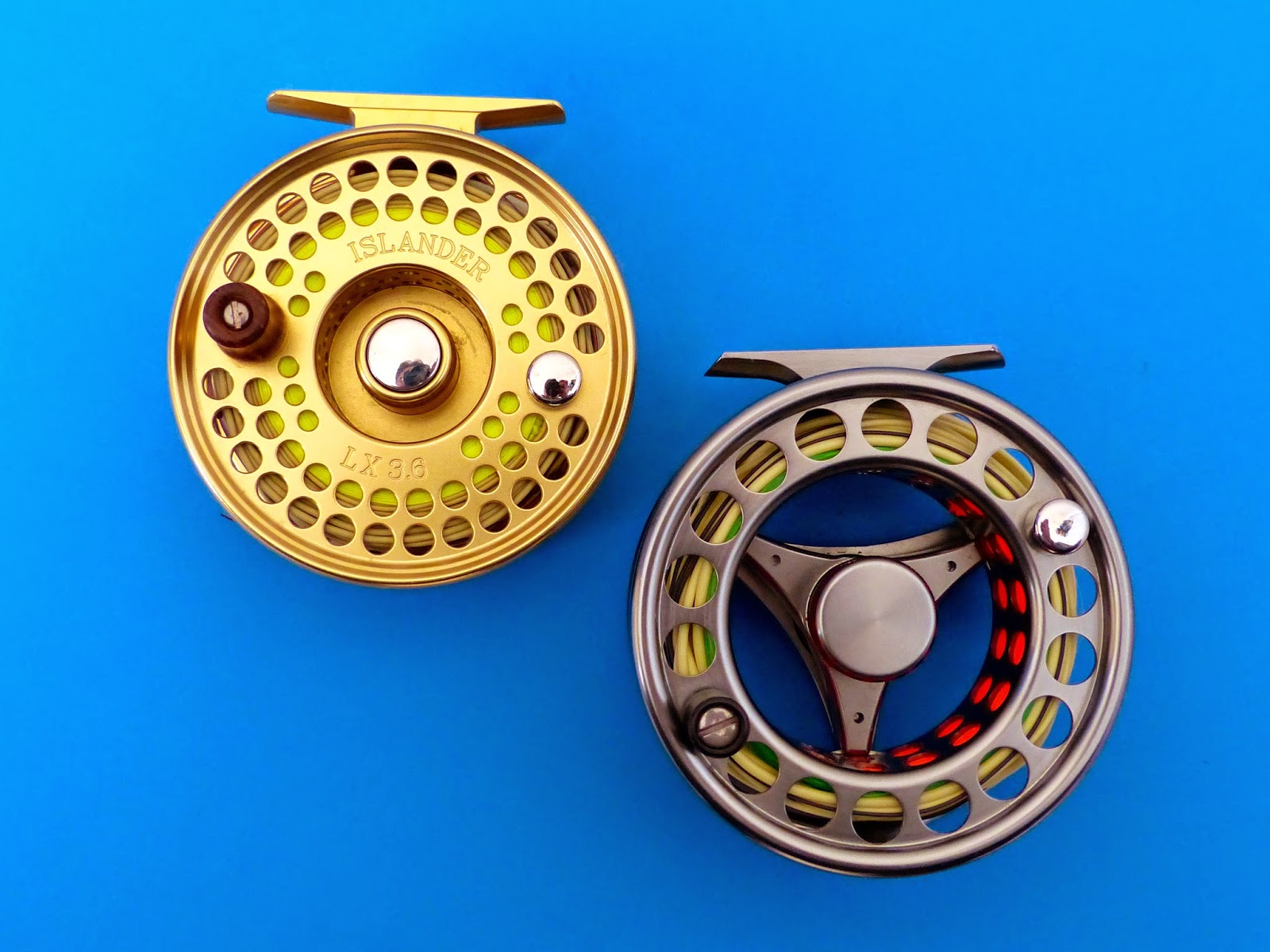
     I was afraid we wouldn't have a salmon season in CT this fall, so I took the rod out for an evening bluefish blitz. I didn't use the IR4. That would have been crazy. I burned out a pawl during the spring American shad season. Bluefish would have destroyed the reel (and my hands). Instead, I used an Islander LX 3.6. Fortunately, it wasn't too windy for a 7 wt. The rod was a little underpowered for bluefish, of course, but it sure was fun. I probably caught two-to-three times as many blues in one night as I did all my salmon this fall. The rod is a keeper, though I just tried the same model Sage X one of my clients happened to buy, so...

Sage One 7126 and Danielsson L5W 8twelve

     I acquired my Sage One 7126 in a straight trade for my TCX of the same size. Though technically I got this rod in 2015, I didn't really use it until a trip to Canada in June 2016. What a rod! It's so light, it felt like I was using a switch rod. Goodbye fatigue. Paired with a Danielsson L5W 8twelve, a 480 gr. Rio Scandi head, and a Rio GripShooter running line, the combo performed admirably, landing salmon up to 15 lbs. I really like having a downlocking reel seat again. I wouldn't mind having a larger, more robust version of this rod, maybe an 8136 or a 9140. 


Redington CPX 9139 and Loop Classic 8-11
Fighting a fish on the Cascapedia's Lake Branch

     I bought an inexpensive used Redington CPX 9139 in case I needed a beefier combo. I paired it with a borrowed Loop Classic 8-11. I wasn't too crazy about this pairing. It felt too clunky and it was tiring to cast. Also, I'm not crazy about classic style, S-handle reels. I suppose I'm glad I have this rig though, just in case I need it. Like I said above, I wouldn't mind replacing it with something like a comparable One or an X (and a different reel), but I'll worry about that the next time I plan on fishing a river with large, early season salmon. 


Beulah Platinum 590 and Abel TR2

     I replaced some trout fishing gear this year too, which was long overdue. For many years, I fished with an Echo II 9' 5 wt. rod. It always felt too stiff. It had no feel. Since most of my trout fishing is with dry flies, I like a rod with a more moderate action. I picked up a closeout Beulah Platinum 590 for a song. I paired it with an Abel TR2. I would have preferred to pair it with an Islander IR3, but I didn't find one in time (I wound up finding one later and paired with my Orvis TLS 4711). Anyhow, I like the Abel TR2 a lot. I wish the drag was adjustable from the outside but, other than that, it's a really terrific reel. The Beulah rod was just what I was looking for. It has way more feel than my old Echo. It's a very nice dry fly rod. My main trout fishing setup is a 4wt., so I didn't use this 5 wt. rig as much as I would have liked to. I caught my personal best dry fly trout with it though, so I can't complain!

     After losing a piece of my Ross Reach 7119 during shad season (then being reunited with it), I decided to get another. I never found one for a good price, so I bought a Ross Reach 6126 while they were on closeout at Sierra Trading Post. This was back when there were still 35% and 40% off STP coupons. The 6126 throws the same lines as the 7119, so I'm safe in case anything happens to one. I never got a chance to try it, so it will have to wait until next spring. It's a shame Ross Reach rods are no longer made.

     I picked up a couple of inexpensive reels, too. I found an old Scientific Anglers System 10 (same as Hardy Marquis Salmon 1) and paired it with my Sage Z-Axis 6110. I wish I had a chance to use it more, but I'm sure it will get a workout next spring. I also got a cheap, used Orvis Battenkill IV as a backup for my Abel Classic Switch. It seems like an ok reel. It's definitely not as nice as the Abel, but it is a lot less expensive. The click drag is a little too tight, so I fiddled with the spring to loosen it up. Next shad season, I'm planning on keeping a different density line on the Abel, Orvis, and SA reels, then bringing two rods with me to make experimenting with depth easier.

    It sounds like a ton of gear, right? I have all the drum gear I need, plus I was good about selling an item of fishing gear almost every time I bought a new item. Like I said, I had to wait for my price on a lot of items, but I saved money in the end (as much as possible when spending it on this silly stuff). I don't have much more gear than I had at this time last year and my wife is none the wiser!

Other Gear


Patagonia Foot Tractor Wading Boots...don't use on wood floors!

     This was the first full season I used my Patagonia Rio Gallegos zip-front waders. I got these at the very end of last season, so they are the previous generation. They are very roomy up top, but that made them perfect for cold weather layering. I was very impressed with how comfortable they are. The Rio Gallegos are much more comfortable than my old Simms G4 Pro waders (stiff). Sometimes I forget I'm wearing waders.  Time will tell if they are as durable as the Simms but, at the moment, I much prefer the Patagonia waders. I will probably buy a new pair of the current generation Rio Gallegos next year. Supposedly, Patagonia refined the fit so they aren't as baggy as the old ones. I'll save the old ones for late fall through early spring and use the newer model throughout the warmer months. I am really glad I made the switch to Patagonia. 

     I just got a pair of Patagonia Foot Tractor wading boots a couple of weeks ago. So far, I like them almost as much as the waders. I have always been a felt boot fan, so I was a little skeptical. Man, those aluminum bars grip! If I had them a week sooner, I might not have fallen onto those rocks, bashed up my left leg, and tore a calf muscle. Sometimes I feel the bars slide a tiny bit, then they catch. They are much easier to get on and off than my old boots, which is a plus. My complaints are minor. They are sort of heavy, so I will probably use other boots for long hikes. Also, I wish they drained a little better. They grab hold of the bottom so well, it's easy to forget those two things. The Patagonia Foot Tractor wading boots will get their real test in the spring when the American shad, striped bass, and seatrout ascend their gnarly rivers.


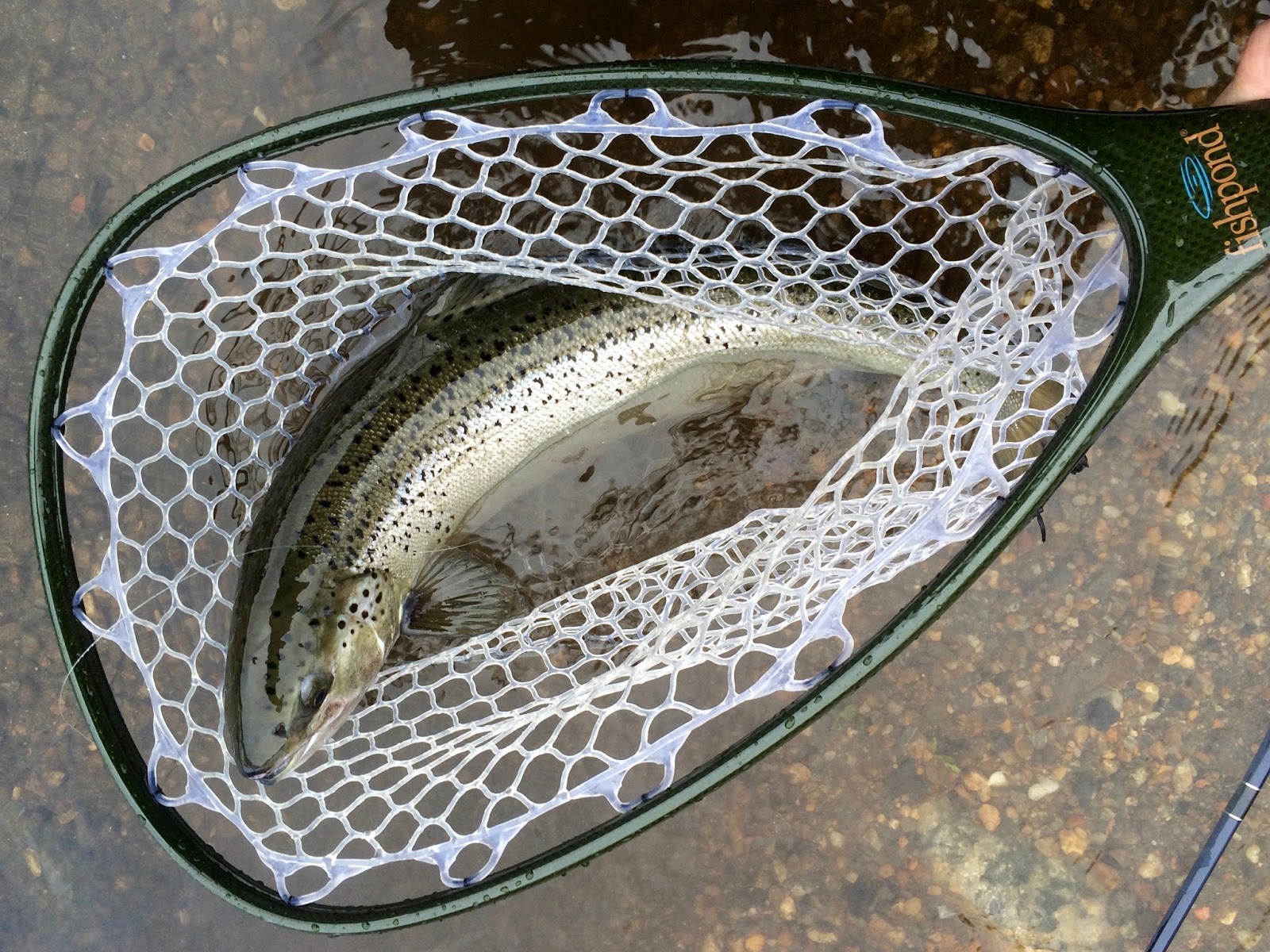
Fishpond Nomad El Jefe net with a nice landlocked salmon

     Last season, I left my Fishpond Nomad mid-length net on the roof of my car, only to have it fall off and get crushed by an eighteen wheeler. I was bummed. It was a little too small for my needs, so it was the perfect time to replace it with the Fishpond Nomad El Jefe net. The El Jefe is a little longer than the mid-length net and has a slightly larger, deeper basket. Otherwise, it is pretty much the same great wading net as my last one. It also doubles as my wading staff. The largest fish I fit into the El Jefe was about 28". That salmon had to be "folded" a little. I don't think it would work for a fish much longer than that. As a sidenote, the El Jefe didn't fit into my Smith Creek net holster as well as its predecessor did. The El Jefe slid around too much. I'm going to go back to the drawing board on this one and figure out a solution in the spring.  

     In addition to making great products, both Patagonia and Fishpond should be commended on their ethical business practices and their commitment to keeping our environment as pristine as possible. If you have a moment, click the following links to read more about the respective corporate responsibilities of both Fishpond and Patagonia. I am very grateful to be affiliated with such socially responsible companies. 


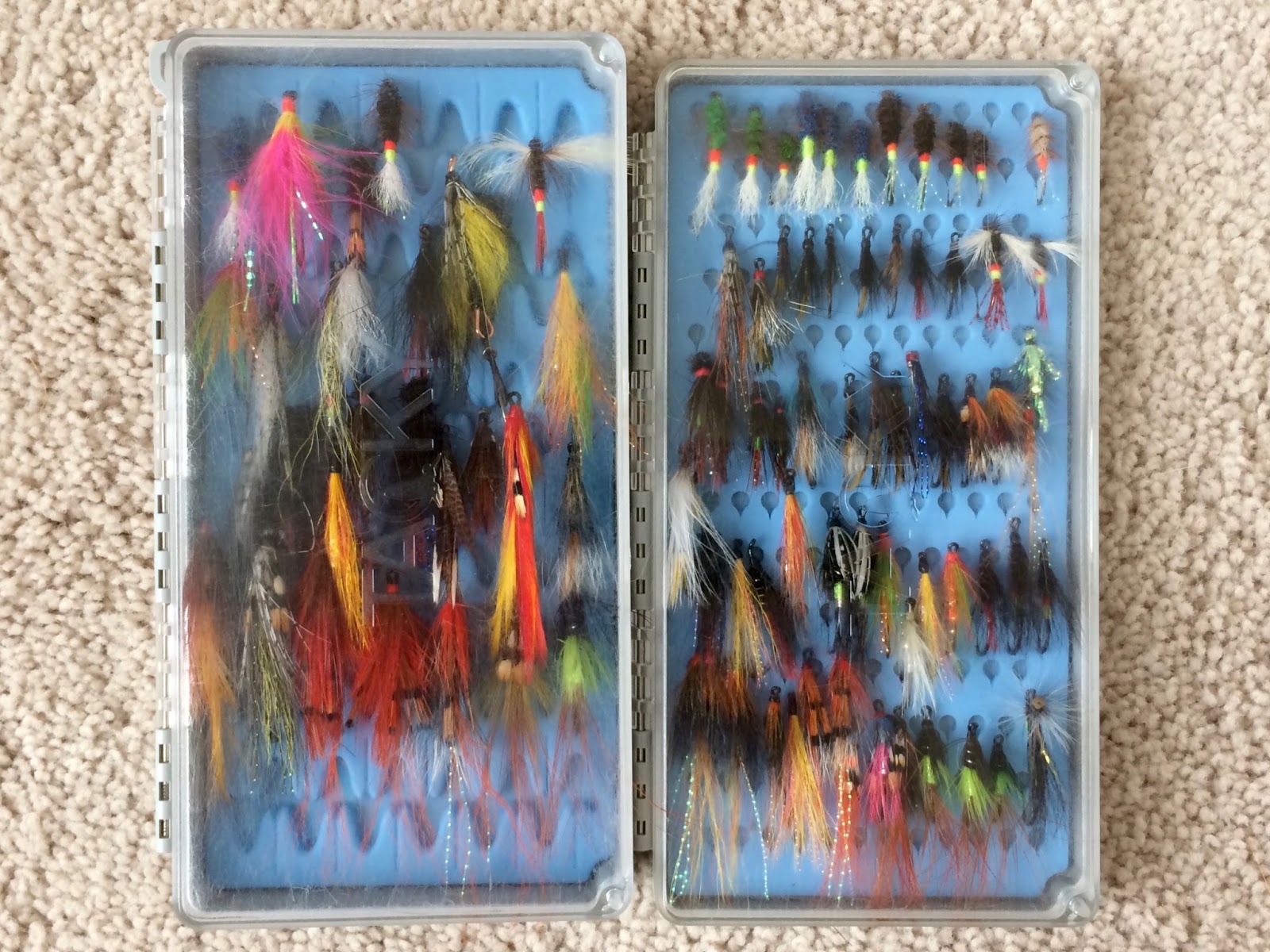
At long last, a double-sided Tacky fly box!

     I'm a big fan of Tacky Fly Fishing's fly boxes. When I get the periodic Orvis $25 off $50 purchase coupons, I use them to buy hooks. I had just received a coupon in the mail and was looking at the Orvis site when I noticed their joint venture with Tacky. Double-sided Tacky boxes! There is one with the normal Tacky slit material on both sides. The box I bought has the normal material on one side and the Tacky Big Bug slits on the other. I could finally cram almost all of my broodstock salmon flies into one Tacky box. Plus, with the coupon, it was pretty inexpensive.

---------------------------------

    Well, that's it for 2016. Thanks again for reading and I appreciate the feedback. Let's hope for more water in 2017. Have a happy New Year! 


Thursday, June 9, 2016

Islander Precision Reels - Great Customer Service!


     A few weeks ago, one of the pawls failed on my favorite shad fishing reel, the Islander IR4. That reel has fought a lot of tough fish. I guess the fish finally exacted their revenge. I called Islander and spoke to their manager, Elliott Williams. I asked for two pawls and a spring. When I inquired about the price, Mr. Williams told me not to worry about it. About a week later, the parts arrived and my trusty IR4 is good as new! Thanks for the great customer service, Elliott and everyone else at Islander Precision Reels. I am a very satisfied angler! 


Ready for duty once again


Monday, March 7, 2016

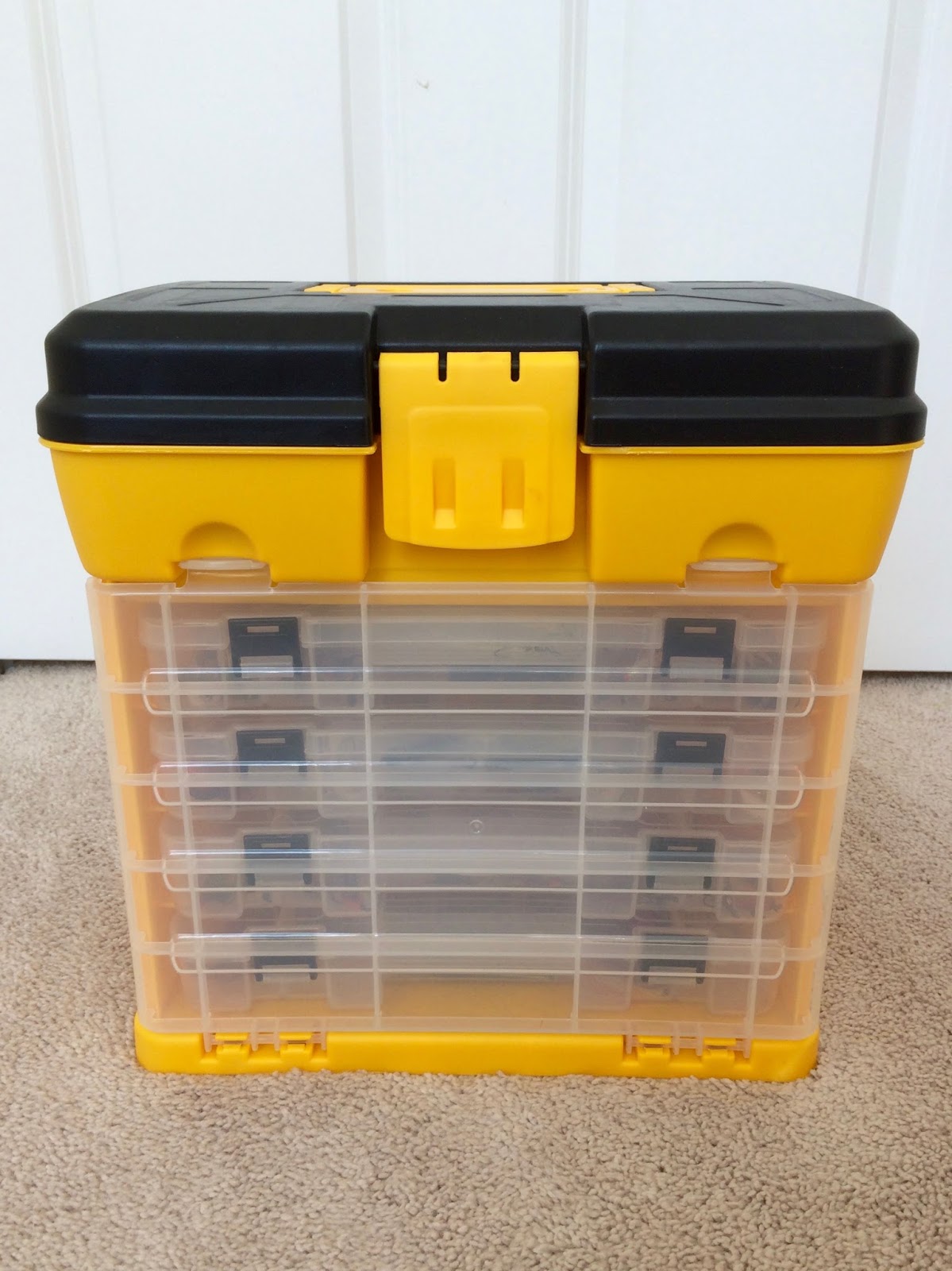
Product Review: Harbor Freight Toolbox Organizer...Tackle Box...Fly Box?


It's no cedar chest, but it gets the job done.

     About 15 years ago, I bought a plastic Black and Decker rolling toolbox from a discount store. I thought I could use it to carry my drum set hardware. When I got home, I was surprised to find a soft sided tool bag inside. The rolling toolbox wound up being too small for the hardware, but the bag looked useful for other purposes. The bag had a rigid bottom and was the size of a piece of carry-on luggage. It was black with orange accents and had little strips of reflective material sewn into its sides. Because the bottom was rigid, folded clothes could be transported without getting too wrinkled. It had several compartments and zippered pockets. They were the perfect place to keep a cellphone charger, business card holder, pair of headphones, etc. To my wife's dismay, this bag became my preferred carry-on/overnight bag. It wasn't the most handsome bag, but it worked really well. I remember checking into the Hanover Inn, in Hanover, New Hampshire, with my favorite bag slung over my left shoulder. My wife looked at me, rolled her eyes, and said something along the lines of, "You know, you look like a real cafone carrying around clothes in your Black and Decker 'luggage.' " She had a point. Soon after, I bought a more appropriate carry-on bag. My trusty Black and Decker bag became my travel fly tying kit bag. As a tying tool and material bag, it works at least as well as it did as an overnight bag. 


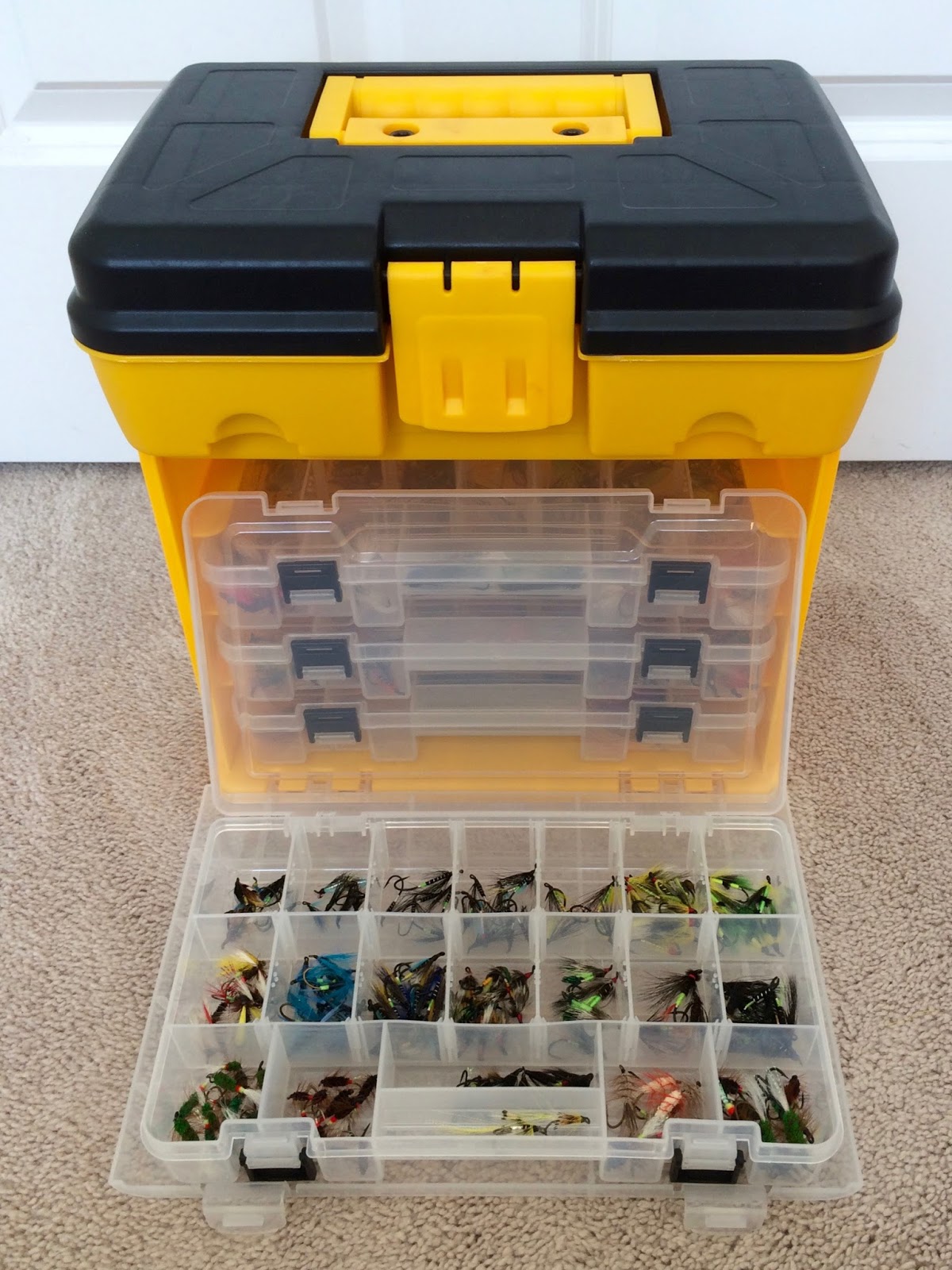
Each tray can hold an awful lot of flies.

     Most fly tyers are aware that the craft store can provide access to a wealth of tying materials at a fraction of the cost of a fly shop. As a tube fly tyer, I've found local art supply stores and hobby shops to be just as valuable. When it comes to repurposing items for fly fishing or tying, my new favorite store is Harbor Freight Tools. 

     For a fly fisherman, Harbor Freight can offer solutions to problems we're not aware we have. If I have enough time, I slowly walk the aisles and scrutinize anything that looks like it might be remotely useful. Last year, I bought an inexpensive heat gun which I use to weld loops in fly lines. Around the same time, I bought a small metal bowl with a large, round magnet glued to the bottom. It is perfect for holding hooks. If the bowl gets knocked off the desk, the hooks don't go all over the floor. 

     I had some time to kill the other night, so I stopped at Harbor Freight on my way to work. After staring at the tool boxes for an unusually long time, I grabbed the one pictured here. I have been looking for a good way to store lots of salmon flies in one place, but hadn't considered this option before. Prior to buying this toolbox, I kept summer flies, fall flies, and tube flies in separate plastic boxes. I would have to do a little reorganization to make it work in this box. I deiced to buy it. 

There is ample room above for extra fly boxes and supplies. 

     My spare tube flies fit in one plastic insert. My fall flies fit into another. My spring and summer flies occupy most of two boxes, with dry flies taking up the remaining space. The top compartment is large enough to hold several fly boxes. I don't carry every single fly box on me at once, but I do like to have some stocked boxes ready to go. I have small box with flies tied on double hooks in sizes 8-12. I have a similar box with size 10-12 single hook flies, as well as one for Buck Bugs and Butterflies. I have a box with flies tied on large double hooks, sizes 2-3/0. There is a large compartment box for dry flies. I have a Finsport fly wallet full of tube flies, but I typically carry only one of its loose inserts on me at any given time. I have two small compartment boxes, one with single tube fly hooks and one with double tube fly hooks. I don't need access to all of these boxes at one time, so I am going to store many as possible in the upper compartment of the toolbox. I plan on leaving this fly box in the car during salmon season and while on trips. If I need specialty flies, all I have to do is swap boxes or grab some from one of the plastic trays.

     Eventually, it occurred to me that I had bought a stripped down tackle box. That's pretty much what tackle boxes are now, right? All I'm missing is a little rack on which to store my spinnerbaits. It's ok. I'm not pretentious. If I carried my clothes around the Dartmouth College campus in a Black and Decker tool bag, my spare Jock Scotts and Silver Doctors can live with being housed in a discount toolbox organizer.  

Monday, January 11, 2016

Gear in Review 2015

Fishpond's Nomad mid-length net in action

As mentioned in previous gear reviews, I'm not exactly on the cutting edge. It doesn't really matter. Most of this stuff hasn't been written about in many places, so this review might still be helpful to some people. Tackle-wise, I didn't change much. In terms of soft goods, I liquidated and started fresh. Anyhow, here are my thoughts on some of these products.

It felt like it took me forever to finally use this reel, but it was worth the wait.


Tackle

I bought too many reels this year. Most were impulse purchases, like the Abel Super 8 I bought and sold without ever using. Others, like a pair of Islander reels, were products I already owned, but wanted in different sizes. I got a great price on a used Islander LX 3.8 and moved it to my Sage Z-Axis 6wt. switch rod. I also bought a used LX 4.0. I haven't even cleaned the old line off of it yet and I don't have a definite use in mind at the moment. I know I like Islander reels, so I bought it when I found the right price. Impulse control...I'd like to say I'm working on it, but I'm not. 

Abel Classic Series Reel (Switch model) 

Unlike the Islanders, the Abel Classic Switch Reel was new to me. I had so much fun with my Islander IR4 in the spring, I decided to go the click and pawl route for my Ross Reach 11'9" 7wt. Unfortunately, it took forever to get enough water in the river to use this combo. One of my clients actually landed a salmon on this reel before I had the chance to fish it myself! Once the water came up, I was in business. It is a very sturdy reel and it has a full cage frame, so thin running lines will not slip between the frame and spool. This reel has a very meaty "growl." I'm not crazy about the sound when I peel line off, but my opinion changes when a fish pulls line off for me. I'm not ready to convert to click and pawl only, but I will probably hang on to this reel. It is a lot of fun, well built, and easy to maintain. 

Sage One 7126

I tested this rod out a couple of years ago at the New England Spey Clave. Instantly, I knew I wanted it. The only problem was the price, which is just too much for me. Two summers ago, I got a good deal on a Sage TCX 7126, aka the "Death Star." It was a fussy rod, but I managed to get the feel for it after a few practice sessions. Anyhow, the opportunity came up to make a square trade...my Death Star for the Sage One 7126 in similar condition (virtually mint), so I jumped on it. It felt as sweet as it did back when I first tried it out. It's very light and responsive. I paired it with a Danielsson L5W 8twelve and a 475 gr. Beulah Elixir. I haven't really put it through its paces yet, but I expect I will in the first half of 2016. I will report more on this rod later this year, though there are plenty of Sage One reviews out there already. 


I am a recent Fishpond convert.


Soft Goods & Accessories


Fishpond Products

I have been aware of Fishpond for a while, but never bought any of their products until late 2015. I bought an older model of their Westwater Guide Lumbar pack in Cabela's Bargain Cave (reviewed here by my friend Steve Zakur). The first thing that struck me about this pack was its attachment points. A lack of attachment points (non-Velcro) always bugged me about my Simms Headwaters sling packs. There are some items I'd rather have on the outside of my pack. I don't want to open and close zippers all the time. I used the Westwater lumbar pack during last season's shad run and I grew to like it, though it was a bit large and I didn't need to carry around a ton of fly boxes and supplies everywhere I went. 

I decided to make a switch to a more modular system. I bought the Fishpond Westwater backpack and chest pack, both of which seem to be discontinued now. The backpack holds all the gear to which I don't need immediate access (e.g. backup flies, extra tippet material, hat and gloves, etc.). I use the chest pack (as a small sling) to carry a couple fly boxes, a leader wallet, some snacks, etc. Despite being small, the chest pack has several attachment points. The chest pack can buckle into the front of the backpack to make it easier to carry on long hikes. I was very impressed with the materials and the construction of both. Neither are submersible, but doth do a great job of keeping rain out. Fishpond uses their proprietary Cyclepond fabric, which is made from recycled nylon fishing nets. It's great to find a company that makes great products in an environmentally responsible way. 

Onto my chest pack, I attached a Fishpond Piopod micro trash container for wrappers and old leader material. I never littered to begin with, but it was nice to have a place to put garbage instead of stuffing it into the pockets of my waders. I also attached a Fishpond Swivel Retractor with a pair of Barracuda aluminum clippers.  I like the way the retractor attached to the pack (with a single, but sturdy pin w/backing piece). The retractor can rotate 360º, so nothing virtually nothing is out of reach. I don't like how the coil dangles loosely, though. I prefer the Simms retractor, which holds the accessory closer and keeps it from rattling around. The Barracuda clippers worked really well. They are very light, sharp, and the blades are replaceable. My one gripe was that they don't work well when cutting off a fly tied with a steering knot (like the Turle knot). Conventional nippers have a beak-like shape which allow them to pull up on the underside of the knot. The Barracuda clipper have trouble with that due to the blade being slightly recessed. If I tied nothing but loop knots and clinch knots, I would buy several pairs of the Barracuda clippers. They will serve me better in the spring and will be ideal for saltwater fishing trips. 


Fishpond Sweetwater reel case (large)

I also tried the Fishpond Sweetwater reel case, in size large. This is a very well made case and offers good protection from falls (I only dropped it once). The small, zippered compartment was perfect for storing extra leaders. I even found the top of the case was good for sticking a flies in at the end of the day. It is supposed to hold four larger sized reels, but that is a bit of a stretch. When I brought a couple of switch rods and a couple of single handers, it worked fine. When I packed two switch rods, a spey rod, and one single handed rod, there was no way I could fit all four reels. I know the fit shouldn't be too loose, but it could be a little wider to accommodate four saltwater sized reels. I will probably pick up the extra large size and use the extra space to store a small camera and other small supplies.

My most significant Fishpond purchase was a Nomad mid-length net. These nets aren't cheap, but they are extremely light and durable. The mid-length net is somewhere between a hand net and boat/guide net. It is 37" in total length and offers a much greater reach than my old Brodin San Juan hand net. The bag is rubber and easy on the fish. It weight less than one pound and causes no fatigue throughout the day. The net floats like a cork. When possible, I found myself dropping it into the slack water when I released fish. It would be right where I left it when I got back. The rubberized handle is easy to grip, even with wet hands. As a bonus, it has a ruler built into the handle. The head is 13"W x 18"L. Virtually all of last season's salmon would fit comfortably in this net. The fish were bigger this season and I had more "tight squeezes" and "no ways" than I would have liked. I would say it the maximum fish length for this net is 24". It might hold a slightly longer fish, but there's not much room for a larger fish to turn. Furthermore, I had to hope a bigger fish will go into the net peacefully, which is not always the case. I will probably try the next size up next season (the El Jefe) just for a little peace of mind. The mid-length net will make a great net for all but the largest sea-run browns and American shad, so I will continue to use it even if I buy a larger net.

The current rig: Fishpond Westwater chest pack & Nomad mid-length net
Smith Creek Net Holster


Accessories

I got pretty tired of my Nomad net sliding around underneath my wading belt, so I purchased a Smith Creek Net Holster. At $39.99, this is one of those items that seems outrageously expensive for what it is. However, it works so well, I would buy another if I lost mine. I anchored it on my wading belt with one side on each side of my rear belt loop. The key was using a wading belt wide enough to fill the space of the net holster's clip. A 2" wide Simms neoprene wading belt was the perfect fit. The net holster didn't move from right to left and the net stayed perfectly upright and stable. It was very easy to remove the net and replace it when necessary. Like I said, it is expensive for what it is, but it does its job well enough to justify the price. 

Tacky fly boxes are a great product. I hope they expand their lineup. 

Everyone has been talking about the Tacky Fly Box, so I bought a couple with an Orvis discount coupon. It was like buying one and getting the other free. I bought the standard box and the Big Bug box. I was skeptical of how good they would be for salmon flies. The standard box, which is definitely more of a trout fly box, worked well as long as the flies were size 6 or smaller, though 8s, 10s, and 12s were a better fit. The Big Bug box held pretty much everything, but its layout is definitely that of a modern streamer box. Tacky guys, if you read this, what we need is a "Steelhead/Salmon" and/or a "Bonefish/Permit" box. The dimensions of the Big Bug box would be fine, but with a layout more like the standard box, but with deeper slits in the silicone. It would be awesome if it could hold flies size 2-10, with anything larger moving to a Big Bug box. I have no complaints about the product though. It is really high quality. It just doesn't totally meet our needs as salmon anglers, which is not really surprising given how small our share of the market is. 


-----------------------------------

I have some fly tying tutorials planned, plus some other tips, so check back soon! 

Monday, June 22, 2015

Fun With New Gear

Orvis Hydros 966-4 and Islander IR4
I love this combo!


As stated in previous gear reviews, I'm not always going to talk about the latest and/or greatest. In the case of high priced items like rods and reels, I'm usually pretty far from being on the cutting edge. I think I can offer some perspective on reasonably priced gear though. In addition to a couple of old standbys, I fished two new combos this spring.

Orvis Hydros 966-4 and Islander IR4


The reel came first in this combo. It was very lightly used and came with an extra spool. I am very happy with my other Islander reel, an LX 3.6, which I used last season on my old Sage 9' 7wt. rod. I wanted to bounce that reel over to my Sage 11' 6 wt. switch rod. I decided to replace it with a used Islander IR4, which is Islander's click and pawl model. The reel wound up being way too light for the old, tip-heavy Sage 7wt. I was pretty disappointed, but not for long. The only solution was to buy a new rod! 

I didn't want to buy another 7 wt. rod. I already have one I love, plus a nice backup. I had two 9' six weights already, but neither has a fighting butt, so I looked around for a "saltwater 6wt." I found myself at the Orvis outlet one afternoon and tried an Access and a Hydros, both 9' 6" 6 wts. The reel balanced better on the Hydros despite the fact that that the Access was actually lighter. The Access felt sort of clunky, but the Hydros 966-4 casted beautifully. It's a shame the Hydros is no longer made (I don't think it was made for very long to begin with). 

The proof is in the pudding, as they say. This combo became my primary rig for American shad fishing this season. And what a combo it was! The rod and reel are a nearly perfect fit. They are light in the hand and perform flawlessly. The rod is a 6 wt. with some backbone and it handled both weighted shad flies and strong fish admirably. If I had to pick one, however, I'd say the Islander IR4 reel is the true star of the pair. Man, this reel SINGS! I will never get tired of this sound. Like its more expensive siblings, it's a solid piece of gear, beautifully machined and pretty to boot. Given the favorable exchange rate, I ordered the large arbor spool to use the reel with my 5 wt. trout rod. 

I had such fun with this pair, it will probably become my primary single handed rig for the Naugatuck salmon season this fall. It was such a blast fishing this combo, I'm looking into suitable summer quarry just so I can keep using it. Carp, perhaps? 


Ross Reach 7119-4 and Danielsson L5W 6nine

Ross Reach 7119-4 and Danielsson L5W 6nine

Technically, I began fishing this combo last December. I think I only fished it once, though. I definitely didn't hook anything with it until this spring. This rig was supposed to be my main setup for fishing small stripers and large sea run browns. If you read my last post, you'd know that never materialized. I did catch some smallmouth bass and American shad with it though. 

I bought the rod on Sierra Trading Post at the insistence of my friend, "The Good Doctor." The doctor has several rods from this line, but raves about the Ross Reach 11'9" 7 wt. switch in particular. With a 40% off coupon, I figured I'd buy it to replace the Redington CPX 11'3" 7 wt. I had borrowed for several years. I used it with two lines: a Vision Ace Scandi F/I  (28' & 380 gr.) and a Rio Steelhead Scandi that started at 31' and 410gr., but I lopped 2' off the front taper to help throw heavy polyleaders better. The line modification worked well and the rod had no problem throwing a moderately weighted fly and a 7.0 ips Versileader. The rod is very light and a pleasure to cast. I look forward to using it with an uncut scandi head and small, unweighted flies, preferably for Canadian salmon this summer (plans not definite). 

I already owned an old, Loop-era Danielsson LW 6nine, which is a very similar reel. I sold off my old Orvis reels and needed a few replacements. I bounced the older Danielsson over to my 8 wt. single handed set up. The new L5W 6nine pairs well with the Ross switch rod. It is a very lightweight reel, so it needs a suitably lightweight rod. According to the specs, the new reel has a slightly larger capacity than the old reel. To me, the range of adjustment in the drag is noticeably wider in the new reel. It's a very smooth reel, especially upon startup. If you absolutely need to keep a fish in the pool, you can really crank down the drag on a Danielsson. Plus, the entire range of drag adjustment can be changed easily, providing an overall lighter or stronger drag range. The outgoing click is very quiet, which some people might not like. It doesn't sing like a click and pawl reel, or even my disc drag Islander, but I don't mind. It does its job extremely well and is a very versatile reel. I've never heard one bad word spoken about Danielsson reels. 

It's a shame this Swedish reel company isn't more of a presence in North America. Reels can be purchased directly from the Danielsson webshop. They are very reasonably priced*. With the relative strength of the USD, now's the time to buy to save a few bucks. 

*Use the webshop prices, not the prices on the main site. The former reflect the current exchange rate and are lower than the prices listed on the main site (for now).

-------------------------------

Other than a Beulah Platinum 9' 5wt., that's it...for now...Yikes! Time to offload more old gear on eBay!

The American shad season is pretty much over.
I need to find another fishery for this combo, asap!


Monday, March 9, 2015

Snaelda & Red Frances Var. (Tied on SRFS Shrimp Tubes)

German Snaelda & Red Frances Var.

I pride myself on being able to tie a durable and reasonably good looking Snaelda on a basic metal tube. Before I tied my first, I figured how hard could it be? It's a simple enough fly. My first attempts were so poorly tied, the tinsel rib slipped and the body self destructed, and that was just from casting. I went back to the drawing board and tied a few Snaeldas that held up to casting, but were not durable enough to stand up to the teeth of a salmon. It took a while and a lot of experimentation, but I found a way to tie a very durable Snaelda, one that could stand up to casting and sharp teeth. I hate tying them, but I know they're built to last.

I became aware of Sean Stanton's "Fran N Snaelda" a year or two ago. Sean's specially designed brass signature tubes were catching on like wildfire in Europe. Due to their tapered shape and flanged end, they supposedly made tying a Snaelda or a Frances easier and faster. I could tie a strong Snaelda or Frances on cheap hobby store tubing. Why would I spend a good deal more money for Sean's tubes? I thought I should try them before I knocked them, but the only place to get them was in the UK and I didn't want to bother with the exchange rate or the shipping. 

At the end of this past January, I decided to buy some Snow Runner from Skeena River Fly Supply. I noticed that they were selling what are essentially Sean Stanton signature tubes under the name of "shrimp tubes." They had shrimp tubes with or without a flange, plus shrimp tubes with an integrated conehead. I don't use cones on my Snaelda or Frances, but I was curious about the flanged shrimp tubes. Since I had the exchange rate going in my favor, I added a variety of sizes to my cart. 

I was a skeptic, but I have to say, I don't hate tying the Snaelda or the Frances nearly as much on the shrimp tubes as on conventional metal tubing. Most of the minor annoyances are taken out of the equation. They're definitely a quicker tie. I imagine the flange helps to protect the hackle, which seems to be the most delicate part of even a well-tied Snaelda. 

Top to bottom: Shrimp Tube Heavy (19 mm) - 1.3 g
Thick Walled Copper Tube (19 mm) - 1 g
Shrimp Tube (19 mm) - 0.9 g
Thin Walled Copper Tube (19 mm) - 0.4 g

I was curious about what the shrimp tubes weighed in relation to the cut-to-length copper tubes I normally use. Most of my Snaeldas tied on .5" and .75" copper tubes, both thick and thin walled. The shrimp tubes are measured in millimeters, but come in sizes comparable to what I have already been using. A 19 mm tube is essentially .75" long. As you can see in the picture above, the thick walled copper tube and the regular shrimp tube weigh about the same amount. The thin walled copper tube is much lighter than I expected it to be compared to the others. The heavy shrimp tube weighs a fair amount, but its shape is conducive to tying a good Snaelda or Frances body. Except in certain scenarios, I prefer a lighter fly. I wish someone made a shrimp tube in the shape and size of the SRFS heavy shrimp tube, but out of a lighter metal (like aluminum). Regardless, I'm excited to see how the flanged shrimp tubes hold up.

---------------------------------------------

German Snaelda - 19 mm SRFS Heavy Shrimp Tube (w/flange)

German Snaelda

Tube: Shrimp tube w/flange (lined with 1.8 mm plastic tubing)
Tail: Yellow, orange and black bucktail; pearl Krystal Flash and Krinkle Flash
Rib: Oval silver tinsel
Body: Black Uni-Yarn
Hackle: Black hen
Head: Black


Red Frances Var. - 19 mm SRFS Heavy Shrimp Tube (w/flange)

Red Frances (Variation)

Tube: Shrimp tube w/flange (lined with 1.8 mm plastic tubing)
Feelers: 20# Maxima Chameleon and Ultragreen
Tail: Pine squirrel tail 
Body: Chinese red Uni-Yarn
Hackle: Brown
Rib: Oval gold tinsel
Head: Red

Monday, January 12, 2015

Gear in Review 2014 - Soft Goods

Simms Coldweather Shirt and Pants

Clothing

In warmer weather, I got a lot of use out of two pairs of lightweight Simms pants (not pictured). One pair was the Flyte pants and the other was the Bugstopper pants. Both were from an older line and have since been discontinued. I didn't buy the latter for its bug stopping ability so much as I liked the look of them. Both pairs were very comfortable, both in and out of waders. A big plus is that they both looked like fairly normal pants, so I was fine with wearing them around town either before or after fishing. Actually, I liked the fit enough to wear them around when I didn't plan on fishing. I'm sure new models have replaced those which are discontinued. I would buy either again (or their new equivalents). 

Simms Coldweather pants...money very well spent

In the fishing clothing department, the best purchases I made in 2014 were Simms Coldweather pants and Coldweather shirt. Along with my Islander reel, the Coldweather pants were the best purchase I made all year. Both are lined with textured fleece and are really warm. The pants are especially warm. By themselves, the Coldweather pants were warm enough for most days. I didn't bother wearing a base layer under the pants unless I knew it was going to be really cold.  Another nice feature is the velcro cuffs. Just cinch up the strap and there's no need to worry about my pants creeping up my leg inside my waders. I used to use velcro-backed neoprene straps to prevent the leg creep, but the built-in velcro straps worked well enough on their own. 

The Coldweather shirt was really nice as well, though not a total knockout like the pants. It's not like there's anything undesirable about the shirt so much as I've found the layering on top easier to do than on bottom. If anything, I think the shirt looks better on its own than the pants do, though it's nothing I'd want to wear indoors for too long. The fleece lining is quite warm. I'd buy either again, especially the pants. 

Simms Headwaters Large Sling Pack
@ Pool 74 "Dambar" - C Sector, Bonaventure

Packs

Simms Packs

I'm sort of a pack junkie. I don't really want to be. I just want to find the system that's right for me. I'm still searching for the ideal setup.

The first packs I used this season were the new Simms Headwaters sling pack (not pictured) and the Headwaters large sling pack.  I used the former mainly for trout fishing. My first impression was that, when it was worn on my back, it was much more comfortable than my old Orvis sling packs. Of course, that might be because the Simms pack came with a waist strap*. It wasn't too bulky, but it was big enough to hold all I needed for a day on a trout stream.

The Headwaters large sling pack is pretty much the same pack as the regular one, just a lot bigger. I used this pack for salmon fishing. It has an extra large compartment, but no water bottle section like the regular pack has. I don't know how I feel about the large pack. I think it was too big for me. I might want to carry a lot of stuff with me at one time, but there's no reason why I need access to all of it all the time. Sure, the pack was more comfortable than my old Orvis Magnum sling pack*, but it is less comfortable than a backpack. I think I'd rather use a smaller pack for a couple fly boxes and throw everything else in a backpack.

Here are my main gripes with both packs. I don't need so many places to store forceps or pliers. I don't really know of anything else I can keep in those black sheaths, so having three seems kind of a waste. Plus, I didn't really trust the magnet in them. I sort of expected my forceps to slip out (though they never did). What I could use is a couple d-rings or attachment points for whatever I want to attach. Even more velcro would have helped out. The packs look nice and streamlined, but I'd trade looks for added functionality in a heartbeat.

I don't like the fold-down "workstation." I didn't wind up using it as intended. It's a good idea, but a full pack sort of gets in the way, especially in the larger model. It's too much to get my arms around just to use the workstation. I'd rather have an empty compartment for fly box storage. Or line it with better velcro so I could stick things to it. I didn't want to keep my tippet spools on the outside of the pack. The velcro didn't stick well on the inside and they slid all over the place.

Despite all the features, which I'm sure a lot of thought went into, these were both just packs to me. They're just a place to store things. I didn't feel like either made my life any easier. Because of the lack of outside attachment points, I feel like they actually made my life a little trickier. I like having access to gear on the outside of the pack so I'm not constantly zipping and unzipping. I'll probably keep the small pack and use it for trout fishing next season, mainly because I already own it. I doubt I'd use the large pack again. I think I'm just not too into sling packs. All that rotating around my upper body gets annoying.


William Joseph Eddy - I'll probably save it for other uses

William Joseph Packs

I tried two small, no-frills William Joseph packs this season. The first was the William Joseph Eddy. This is no more than a water resistant shoulder bag. It's not really much more than a pouch. Like the sling packs, a couple of attachment points or velcro would have been nice, but no big deal. This pack was made to be pretty basic. The front pocket was small and hard to get my hand into. I think I used this pack once or twice. It didn't really work for me, though it might make a good pack for my night fishing gear. It was inexpensive, so I'll keep it and find a use for it. I might use it as a travel fly tying bag. 

William Joseph Rip Tide Hip Pack - Not a bad little pack
The second pack I tried was an older William Joseph hip pack. This was the first time I've used a hip pack. I liked it. In the course of a day, this pack would loosen and slide down my waist, but it has no shoulder strap to help keep it up. This particular hip pack is pretty basic. The zippered compartments on the belt were a nice touch. Overall, it was more useful than the Eddy was. It's a pretty small pack, but it worked well when used in conjunction with a backpack and/or wading jacket. I think I want a little bit more from a hip pack in the future, but this one wasn't too bad as long as I kept it light.

Conclusions

Rotating a sling pack got on my nerves this season, but rotating the waist pack didn't bother me as much. I'm in the market for a new hip pack for next season. I like the hip pack/backpack combo best of all so far. I have been using a Simms Dry Creek day pack, but it's sort of small. I might look into getting one of their new Dry Creek backpacks. Instead of trying to cram everything in one pack and carry it on me at all times, I'd rather carry the essentials and leave the rest on the bank.

The Simms clothing is good stuff. It's pricey, but there are always deals to be had in the off season. I might try to pick up some more Coldweather gear if it goes on sale in the spring.

*My old Orvis sling packs didn't come with waist straps, though they came with buckles for them. I contacted Orvis to get a replacement waist strap. They offered to send one at no charge. They never sent it. 

Monday, January 5, 2015

Gear in Review 2014 - Hardware

Danielsson L5W 8twelve and the Banana tube fly


These reviews aren't going to be anything earth shattering. Most of these products have been around for a while, but are new to me. Some were purchased as used items. Regardless, it might help someone make a decision, so here goes...

Rods & Reels

My first new acquisitions happened just after returning from Quebec. I found a good deal on a barely used Sage TCX 7126, more commonly known as the "Death Star." I pared it with a new Danielsson L5W 8twelve reel, a couple Beulah Elixir V2 Scandi heads, and a Rio GripShooter running line (more on the lines below). It would be unfair of me to review the rod and the reel at this time. Aside from a little casting practice, I've barely used either. I'll wait, catch some fish on it next spring and summer, then write a more thorough review next year. I wish I had thought to buy it before the Quebec trip. I'll have to take it up with me in June 2015.  

My next purchase was a new (used) reel for my Sage Graphite II 9' 7wt. I got a great deal on an Islander LX 3.6. One of the first salmon I ever hooked was on my guide's G. Loomis/Islander combo. I remember liking the reel, but it was a while ago and I don't remember much more than a general impression of its performance. This deal was too good to pass up, so I decided to roll the dice. I'm glad I did. I LOVE this reel! It's a little heavy, but not heavy enough to be a burden. My old Sage rod is heavier than a new rod, so it balances ok. The Islander's Teflon and graphite-impregnated cork drag is buttery smooth and has a huge range of adjustment. I really like the feel of the handle. This reel is a real pleasure to fish with. I have my eyes peeled for another, larger, Islander LX (whether I need it or not). 

Islander LX 3.6 (used on Sage Graphite II 9' 7wt.)
 Danielsson LW 6nine (used on Sage Z-Axis 11' 6wt. switch rod)

I purchased another previously owned reel shortly after buying the Islander. Though my new Danielsson hasn't seen any action yet, I am already a big fan. A new friend gave me a good deal on his old, Loop-era, Danielsson LW 6nine. I figure it's about ten years old, but works like it was brand new. This reel went on my trusty Sage 6110 switch rod. It's a little light for that rod, but wasn't too bad. It got less action than the Islander and didn't fight as hot of fish, but I was still very impressed. The drag is just as smooth as the Islander, though not quite as "buttery" feeling. I can't explain it exactly...you just have to trust my choice of words on it! What the Danielsson reel loses in feel, it more than makes up for in dependability. The sealed drag seems impervious to dunking, cold temperatures, etc. I definitely have more faith in the Danielsson late in the season than the Islander. I own both, so I guess I don't have to decide between the two if I don't want to! 

I really do like both reels. I'm constantly scouring the internet for good deals. Plenty of used Islanders come up on eBay. However, when I found out Danielsson is only selling direct to consumers now, and also having a holiday sale, I pulled the trigger on a new L5W 6nine. The new one is a little different from the older one I bought used. It's the little brother to the reel I am using on the Death Star. The new reel is a little heavier than the old reel and holds more backing. Also, I think the drag on the new reel has a wider range than does the old one. I am going to use the new Danielsson on the aforementioned Sage switch rod and move the older one over to my main salmon single hander, a Vision GT Four 9' 8wt. 


Clockwise, L to R: Berkley Big Game 30# mono, Beulah Elixir V2
Scandal Head, Omnispool Switchbox & Rio GripShooter

Running Lines and Shooting Heads

When I first starting using a trout-sized switch rod a couple of years ago, I made the decision to use a monofilament running line (Rio SlickShooter). I liked the performance of the mono more than I thought I would. This season, I decided to switch all my running lines over to mono. The first running line I tried was Berkley Big Game in 30# test. At first, I bought the wrong color. I bought Green, which became virtually invisible in the water. I bought another spool, this time in Solar Collector (a fluorescent/hi-vis green). I can't really find much bad to say about the stuff. It shoots like crazy, has minimal memory once stretched and fished, and it's cheap. Like, really cheap. It's nice to avoid paying the "fly fishing tax" every now and then. I saw this post about using rubber tape to reduce mono slippage. The Temflex 2155 rubber splicing tape works like a charm! 

Rio decided to go a different route when it came to getting a good grip on slippery monofilament running lines. The Rio GripShooter has a coated front section that feels like fly line. It is a pleasure to use, though much more expensive than Berkley Big Game. I've only tried it a few times, but so far I really like the GripShooter. I figure I'll use it for a while and see how it holds up. If the coated section is durable enough, I'd consider purchasing it for other setups. 

Not being one who can pass up a good deal, I bought several Beulah Elixir V2 heads at reduced Sierra Trading Post prices. I think the heads have some sort of cosmetic imperfection, but I have yet to find any. I bought heads for two different switch rods and two heads for the Death Star. I liked the original Elixir. The fine front taper makes it a great head for surface presentations. I prefer other heads when using sinking polyleaders, however. The Elixir V2 seems to turn over better for me than the original. The taper is still pretty fine, so I continue to use it mainly for intermediate-to-floating polyleader applications. I especially like the Elixirs made for switch rods. No complaints so far! 

Accessories 

I have only one item to review in this category, but it's an item I really enjoy using. The Omnispool Switchbox is one of those little inventions that just makes our lives that much easier. I never really minded moving fly lines between spools and reels, but the Switchbox kit makes it so much easier. It really doesn't get much easier. In fact, I'm starting to wonder how I lived without this before. It couldn't be any easier to switch a line alone and virtually anywhere...at home, on the riverbank, in a boat, etc. It's a piece of cake. It's so much easier, it's almost a pleasant task. The kit costs between $20-$25, which seems sort of pricey for plastic parts, but it's worth every penny. I'm actually less inclined to buy spare spools for my reels now that I can switch lines with so little hassle. I'm not going to explain how it works. Go to their site and watch a video. 'Nuff said! 

Next week, I'll be reviewing some packs and clothing. Check back!