Wednesday, May 9, 2012

Lady Amherst 5/0

Lady A, with mallard strategically hiding lacquer stains

Despite being tied in the classic Ranger style, the Lady Amherst is not what the purists consider a "true classic" salmon fly. Having been invented  in post-Victorian era Canada (c. 1925) by George B. Bonbright (Fishing Atlantic Salmon; Bates, 348), the Lady Amherst is most closely associated with the large salmon of Québec's Grand Cascapedia. The Lady Amherst is an early season fly, most commonly tied on large irons. To me, she's every bit as "classic" as any of them.

The Lady Amherst was the first fully dressed pattern I tied, probably four years ago or so. While more iconic flies such as the Jock Scott and the Popham seem to garner the most attention, the Lady Amherst was the fly that really drew me in. I have a real affinity for the contrast of white/dark feathers, especially from the Amherst Pheasant and the Silver Pheasant. I think I still have a couple of crude, early ties of this fly, which will definitely see some time in the water next month.

Monday, May 7, 2012

Fly Box-Doubles for the Kola River

A big box o' doubles

Though I mainly plan on fishing various tube flies while in Russia, I couldn't help but tie a box of doubles for myself. I guess I just love the way a fly looks on a double hook. These are large flies, in sizes 2/0 and #1-#4. I think some of the 2/0 flies might weigh at least as much as some of my flies tied on copper tubes.

Most of these doubles I tied are established Canadian fly patterns, though there are some European patterns represented as well. The flies can be divided into three categories:

1. Large to jumbo-sized versions of flies I have found to be particularly successful, such as: Sugerman Shrimp, Ally's Shrimp, Same Thing Murray, Red/Green Butt Butterfly, Black Bear Green Butt and the Green Machine.

2. Proven flies I have fished, but have not yet had success with, such as: General Practitioner, Rusty Rat and Silver Rat.

3. Flies which are totally new to me, such as: Ghost Stone Fly, Picasse, Sunburst Flamethrower, Green Highlander Longtail, Blue Charm w/Green Butt and the Pompier.

I tied the large Green Machine with chenille, but I think I'm going to tie a couple with deer hair (as well as a couple of large Shady Ladies). I don't think the buoyancy of the deer hair will offset the weight of the double hook very much, especially considering I tend to pack the deer hair on my bugs rather loosely. This was my first chenille Buck Bug-style fly. The deer hair versions look more durable to me.

Anyhow, we'll see what happens!

Monday, April 30, 2012

Ask About Fly Fishing Podcast-Tying the Classic Salmon Fly with Michael Radencich


Airing this Wednesday night at 9pm EST (5/2/12)

Ask About Fly Fishing.com Internet Radio

This week's topic is "Tying the Classic Salmon Fly" with author, photographer and expert salmon fly tyer Michael Radencich. Presumably, Mike will be talking about his forthcoming book, "Classic Salmon Fly Patterns." With 1,738 flies pictured, this book will be the largest illustrated compendium of classic salmon fly patterns ever published. 86 salmon fly tyers from around the word contributed to this landmark project. I am excited and humbled to be one of them! 

According to Amazon, the book is slated for release on August 1st of this year. It can be preordered from Amazon. Click here for more info.


Saturday, April 7, 2012

HKA Sunray/Bismo/H.M.'s Sunray Variant***

My interpretation of Mortensen's pattern 

It has been a little while since my last post, but I have been working a lot lately (which, for me, is a good thing). I have been tying, but I've just been lazy about photographing flies and posting. Excellent trout fishing during an unusually early New England spring has been quite a "distraction" as well!

This fly is my interpretation of a pattern shown in Henrik Mortensen's fifth DVD, "The Scandinavian Spey Cast II." Mortensen shows a handful of these flies, but does not go into detail about the dressing. Though I do not know the exact dressing, I'm confident that my interpretation comes close enough to the original and it should work fine for early/late season salmon. Actually, I've caught quite a few trout on the orange one so far this season, so I might have to tie extras for my streamer box.

HM Sunray in green

Here is my dressing for the HKA Sunray/Bismo (Mortensen's Sunray Variation):

Tube: Aluminum, 1.25"
Rib: Silver wire
Body: Flat pearl body braid
Underwing: Polar bear hair or bucktail, white or color to match wing1 and hackle
Wing1: arctic fox, finn raccoon or temple dog (orange, green, blue, yellow, etc.), topped with two strands of pearl Flashabou
Wing2: Sparse bunch of arctic fox, finn raccoon or temple dog dyed black, topped with sparse bunch of chasm ere goat dyed black
Overwing: two strands each of pearl Flashabou and Krystal Flash
Sides: Grizzy hackle, dyed to match Wing1
Eyes: Holographic eyes
Head: Black with multiple coats of Sally's Hansen's (now using UV-cured finish and one coat of Sally Hansen's)

As a side note, this was a little bit of a crude, DIY, cost-saving project. The aluminum tubes are from a local hobby shop/art supply store, though they are lined with HMH liner tube. I believe I paid under $2 for 3' of aluminum tubing, which is substantially less than what anyone in "the industry" charges for a pack of aluminum tubes. They can be easily cut by rolling a straight edge razor perpendicular to the tube, then breaking it in two. The ends are filed smooth and then the tube can be lined.

The grizzly hackle is from a Whiting Bugger Pack. I don't need a ton of it dyed in different colors, so I used Aaron Ostoj's Kool-Aid dying instructions and got pretty good results. Instructions can be found on Ronn Lucas's website (under "Articles, Documents, Ephemera"). It's really easy, inexpensive and the colors can be quite vibrant. I have even tried mixing colors with some great results.

Happy tying and fishing...I'm very excited that salmon season is almost here! As always, feel free to contact me with any questions.

***UPDATE (07.19.14): It looks like there is a bit of intrigue pertaining to the origins of this deadly fly. A friend filled me in on the backstory last night. See the article linked below for details.

Global Fly Fisher - HKA Sunray/Bismo 

----------------------------------------------------

Here is a trailer from Mortensen's "The Scandinavian Speycast II"


Thursday, March 8, 2012

General Practitioner

General Practitioner on a 1/0 low water double

The General Practitioner, known nowadays as the G.P., was created by Col. Esmund Drury in the early 1950s. A shrimp imitation, Drury created the G.P. when live prawns were banned on the River Test. There have been many variations on Drury's original pattern, though the above were tied true to his instructions, which can be found in Col. Joseph Bates's classic "Atlantic Salmon Flies and Fishing" (except for the addition of a little Krystal Flash on my part).

These two G.P.s, both the original orange and the black variation, were tied on a vintage Partridge low water double. I'm not sure what size it is, but I would estimate it's about 1/0. The hook runs about 4" in total length and will fished with a sunk line in high, cold water.

Friday, March 2, 2012

Fly Shop - Grand Opening

A small sample of what is available

I have sold several classic/artistic flies, framed pieces and destination fly boxes through my website, but I have redesigned the "Fly Shop"  and have added more merchandise. I plan on keeping the Fly Shop well stocked and frequently updated from this point forward.   At the moment, only flies are available for purchase, however, I might expand to tying materials and used gear sometime in the future. 

Don't be afraid to ask for something you don't see listed, be it a display fly or flies for fishing. I take commissions for classic salmon flies, original display flies and flies for specific fishing destinations. I'm not set up (nor do I have the time) for mass commercial tying orders, but destination fly box orders are generally not a problem. I don't carry a large inventory of fishing patterns, so flies can be tied specifically to your specifications. 

PayPal, Visa, Mastercard, Amex, Discover and money orders are accepted . Also, I'm willing to consider a fly, display or artwork  trade for fishing gear or a fishing trip. 

Stop by the new Fly Shop and have a look around!

Product Review: Finsport Fly Wallet 6"x3" (tube fly storage)

Finsport Fly Wallet-6x3

I had a Cabela's gift card so, with tube fly storage in mind, I decided to try out a Finsport Fly Wallet (size 6x3). The 6"x3" refers to the size of the ziploc-style pages inside the wallet. The outer dimensions are approximately 7.5"x5.5", which was the right size to fit in the outer pocket of my Orvis Safe Passage Sling Pack (reviewed here).

Complete wallet w/bound pages
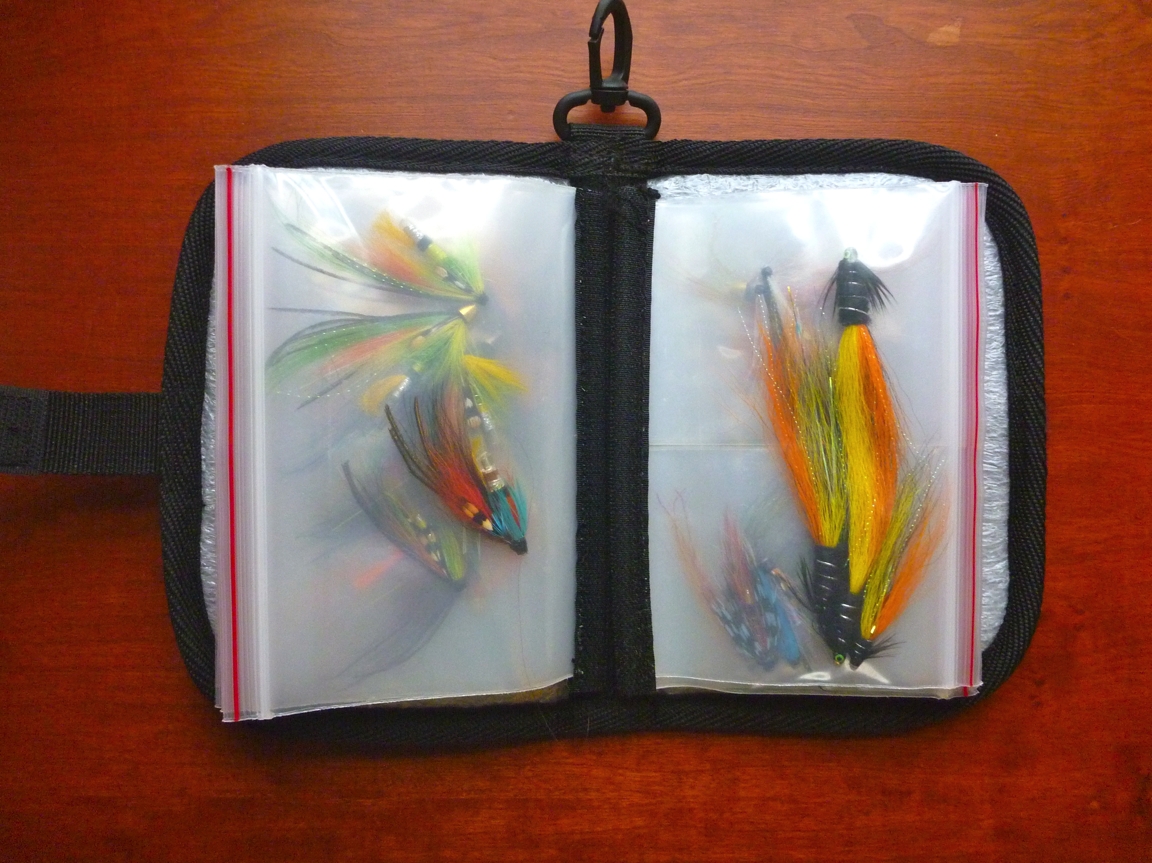
This size wallet has 12 pages, split between two removable, velcro-bound inserts. Individual pages cannot be removed from the velcro binding, but each 6 page insert can be removed from the wallet itself. One insert has 6 full-sized pages and the other has two full sized pages and eight half pages (for storing small flies, tubes, accessories, etc.).

Pages removed from wallet

I will probably fill the entire wallet with tube flies, but I could see one storing relatively flat items in it, such as tippet spools, polyleaders, junction tube, etc. There is definitely more than enough space for all my tube flies (and tubes yet to be tied). The plastic does squash the hackle a bit, but it does so evenly on all sides. I'm sure the tubes will "spring back to life" as soon as they hit the water.

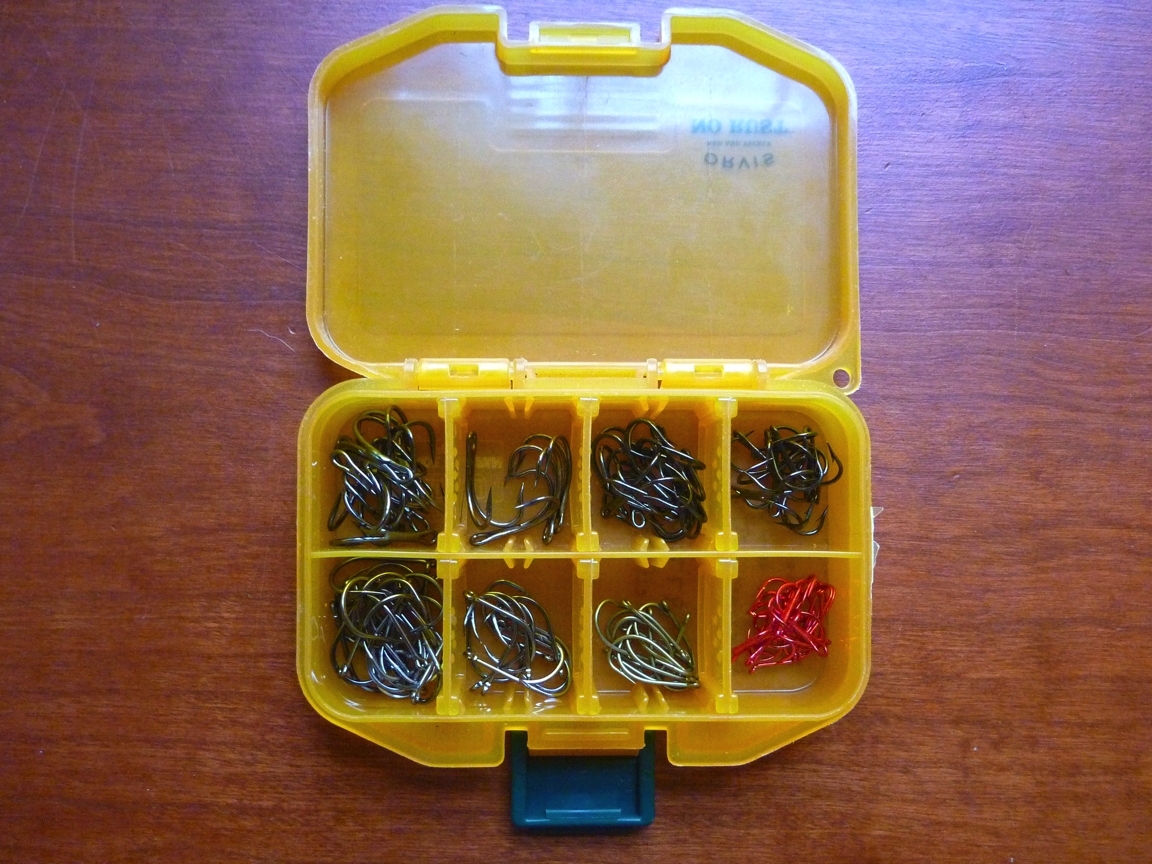
Orvis No Rust compartment box (small)
Because the wallet pages are flat, it would be difficult (not to mention destructive and potentially hazardous) to store double or treble hooks inside the wallet itself, however, single hooks will lay flat and would probably do well in one of the half pages. Since I carry singles, doubles and trebles, I have chosen to keep all my hooks together in a small Orvis No Rust compartment fly box.


The Finsport Fly Wallet has a mesh outside pocket. I'll probably use it to store my wet tube flies within, as they will be able to dry out a bit and they won't magically disappear on me, which seems to be a problem from time to time.

Tube & hook storage combo
The true test of this product will happen during the upcoming fishing season. I have high hope for this wallet, especially given its modest price of $16-$17. I can fit many more tubes in it than in my old compartment-style box and it takes up less space overall. 

Do you have any suggestions for tube fly storage solutions? If so, please feel free to share down below! 

UPDATE-March 2013

I've used this for a little more than one season now and I like it just as much as when I first bought it. When I finish using a tube fly, I remove the hook and place the tube in the outside pocket. They dry off just fine. I still use the small Orvis box to store the bulk of my hooks, but I stick as many as I think I'll need for a day of fishing right into the foam inside covers of the wallet. The little yellow hook box stays in my pack for backup. Really, I don't need to use the Orvis box at as long as I'm not going to use any treble hooks. Also, I stick tubes (attached to hooks) into the foam if I think I'll use them sometime that day. It makes them easier to retrieve than if I had to dig through the plastic pouches. I'm planning on carrying fewer flies with me this season and I am only using the page with the small and large pouches. We'll see how that works out.

I still think this is a tremendous product for the price.